To verify business news, you check a story against the evidence behind it, not just the reputation of the website that published it. A reliable verification process means identifying the exact claim, tracing it back to its original source, confirming the date and context, checking the numbers against filings or official data, comparing genuinely independent reporting, and separating confirmed facts from forecasts, claims, and opinions. A story can come from a respected outlet and still be incomplete, outdated, or built on a single unconfirmed source.
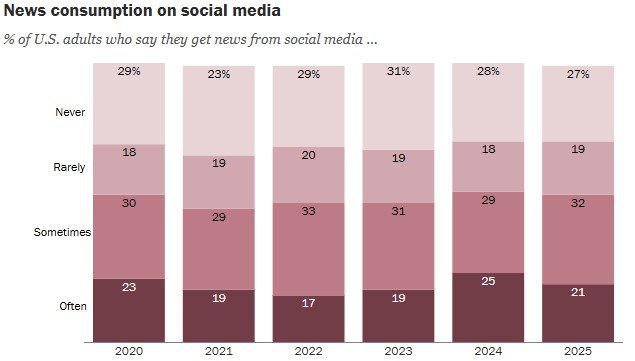
That skill matters more every year. In the United States, 53% of adults say they at least sometimes get news from social media (Pew Research Center, 2025), yet only 25% say they trust most news most of the time (Reuters Institute, 2026). Knowing how to verify business news closes that gap.
In this guide, you’ll learn how to:
- identify the original claim
- assess the source
- trace information back to primary evidence
- verify numbers and dates
- cross-check independent reporting
- spot misleading headlines and recycled news
- decide how much confidence to place in a business story
How to Verify Business News: A Practical Guide to Checking Sources, Claims, and Evidence
Verifying business news means confirming that a specific claim is supported by evidence you can trace and check. It is not the same as deciding whether you trust a publication. The question is narrower and more useful: can this claim be substantiated, and how confidently?
Verification vs. Reading Multiple Articles
- Ten websites reporting the same claim are not ten independent confirmations. If they all rewrote one wire story or one press release, you still have one source.
- Many publications repeat the same original source. Phrases such as “the company said” or “as first reported by” point back to the origin.
- Social posts and press releases are not independent evidence. A press release tells you what a company wants to say. It doesn’t independently confirm the claims inside it.
What Counts as Strong Evidence?
| Evidence level | Examples | What it can establish |
| Primary evidence | Company filings, regulatory announcements, official statements, earnings reports, court documents, government data, audited financial reports | What was filed, announced, reported, or decided |
| Secondary evidence | Established business publications, specialist financial journalism, analyst research | Independent reporting and interpretation |
| Weak or indirect evidence | Social media posts, anonymous claims, aggregators, copied articles, unsourced newsletters | Only that a claim is circulating |
Secondary and weak evidence can still be right. They simply need to be checked against something stronger before you rely on them.
How to Verify Business News: The 7-Step Framework
This framework works for almost any business story, from an earnings headline to a merger.
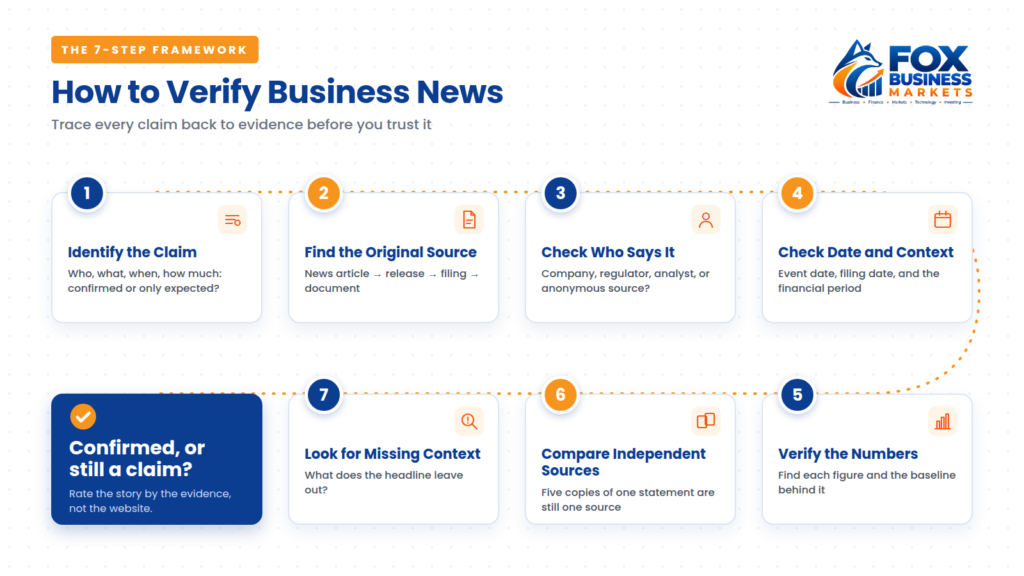
Step 1: Identify Exactly What Is Being Claimed
Write the claim down in one sentence, then break it into parts: who is involved, what happened, when, where, how much, and, most important, is it confirmed or expected?
Deal news shows why this matters. On January 18, 2022, Microsoft announced it had agreed to buy Activision Blizzard for $68.7 billion. The deal didn’t close until October 13, 2023, after approvals from the European Commission and the UK’s Competition and Markets Authority and a US court ruling against the Federal Trade Commission’s challenge (Forbes). For 21 months, “Microsoft is buying Activision” was true as an agreement and false as a completed transaction. Each stage needs different evidence, and headlines regularly blur them.
Step 2: Find the Original Source
Don’t stop at the article that reports the claim. Trace it as close to the original as possible:
News article → company statement → regulatory filing → underlying document
When Lululemon reported its second quarter of fiscal 2026 on September 3, 2026, news outlets reported falling revenue and a cut to its outlook (CNBC). The company’s release appeared on Business Wire, and the same document was filed with the SEC as an exhibit to a Form 8-K (SEC). The SEC copy is the closest you can get to the original record.
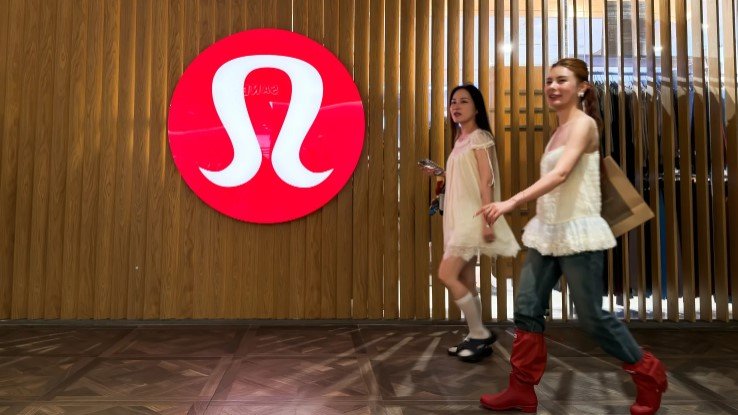
For US-listed companies, Form 8-K is the “current report” companies file to announce major events, generally within four business days (Investor.gov). If a story says a company signed a major deal, changed its CEO, or reported results, look for the filing.
Step 3: Check Who Is Making the Claim
Identify the source of each piece of information: the company, a regulator, a government agency, an executive, an analyst, an unnamed source, a journalist, or a social media account.
The type of source determines what a statement can establish. A company’s statement can establish what the company says. It does not automatically prove every claim in that statement. When Lululemon’s management said on its earnings call that negative social media commentary had hurt the quarter (CNBC), that confirmed management’s explanation, not the cause.
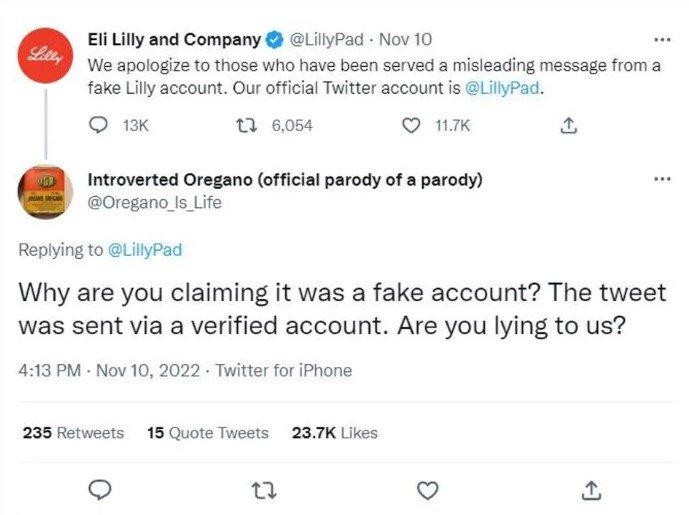
Also confirm that the source is who it appears to be. In November 2022, an impostor account with a paid verification checkmark posted that Eli Lilly was making insulin free. The real company later apologized for the “misleading message from a fake Lilly account” (Forbes). A real announcement of that size would have appeared on the company’s investor relations page.
Step 4: Check the Date and Context
Presenting old information as new is one of the most common problems in business news. Check the publication date, the event date, the filing date, the financial period the numbers cover, and whether the article was updated.
Why Dates Matter in Business News
- Earnings: a quarter that ended three months ago is not current performance.
- Acquisitions: a deal announced last year may since have closed or collapsed.
- Lawsuits: a case filed years ago may have been settled or dismissed.
- Layoffs: an old round of cuts can be recirculated as new.
- Regulations: a proposed rule and a final rule can be months apart.
- Stock-market moves: prices change by the minute, so a figure without a time is incomplete.
Real Example: One Report, Different Periods, Different Headlines
The period you pick can change the headline. All of the figures below come from the same Lululemon release for the second quarter of fiscal 2026:
| Measure | Period compared | Change | Possible headline |
|---|---|---|---|
| Net revenue | Q2 2026 vs. Q2 2025 ($2.42B vs. $2.53B) | −4% | “Lululemon sales fall” |
| Net revenue | First half 2026 vs. first half 2025 ($4.89B vs. $4.90B) | −0.2% | “Lululemon sales hold steady” |
| Net income | Q2 2026 vs. Q2 2025 | −11% | “Profit dips” |
| Net income | First half 2026 vs. first half 2025 | −24% | “Profit drops by nearly a quarter” |
| Cash and cash equivalents | Aug. 2, 2026 vs. Aug. 3, 2025 ($1.39B vs. $1.16B) | +20% | “Cash pile grows” |
| Cash and cash equivalents | Aug. 2, 2026 vs. Feb. 1, 2026 ($1.39B vs. $1.81B) | −23% | “Cash shrinks by $417 million” |
Source: Lululemon second-quarter fiscal 2026 results (SEC Form 8-K, Exhibit 99.1). Percentages calculated from the release.
Every headline in that table is accurate. Before you accept one, check which period it compares, and against what.
Step 5: Verify the Numbers
Find each figure, whether revenue, profit, valuation, market share, deal value, job cuts, or a stock move, in the primary document. If you can’t, treat the number as reported, not verified.
Don’t Trust Percentages Without Their Baseline
The same data can produce very different headlines. The August 2026 Consumer Price Index rose 0.4% for the month on a seasonally adjusted basis, and 3.4% over 12 months (BLS). “Prices up 0.4%” and “prices up 3.4%” are both correct. Before accepting any percentage, ask what it’s compared with: the previous quarter or the same quarter last year? Constant or reported currency? Organic growth, or growth bought through an acquisition?
Official data can also change after its first release. In the August 2026 jobs report, the Bureau of Labor Statistics revised July payrolls from a loss of 23,000 to a gain of 21,000 (BLS). A story built on the first July figure got the direction wrong.
Step 6: Compare Independent Sources
Cross-checking is not the same as counting websites. If five articles rely on the same company statement, you still have one source. Independent confirmation comes from sources that reached the information separately: a filing that matches the press release, a regulator’s own announcement, independent reporting with its own documents, government data, or audited financial statements.
When reports disagree, that’s useful too. After Lululemon’s results, one report put the premarket share drop at more than 17% and another at 20% (Yahoo Finance, CNBC). Neither was wrong. They measured the price at different moments.
Step 7: Look for Missing Context
What Does the Headline Leave Out?
A story can be accurate in every sentence and still mislead. Watch for:
- “Record revenue” while costs also hit a record and profit fell
- A percentage without a baseline
- A forecast presented as fact
- A preliminary result presented as final
- A quote stripped of its context
- An announced or proposed deal presented as completed
How to Verify Different Types of Business News
How to Verify Company Acquisition News
Check the company announcement, the regulatory filing, the transaction terms, whether the deal is proposed, agreed, or completed, the approvals required, and the expected closing date.
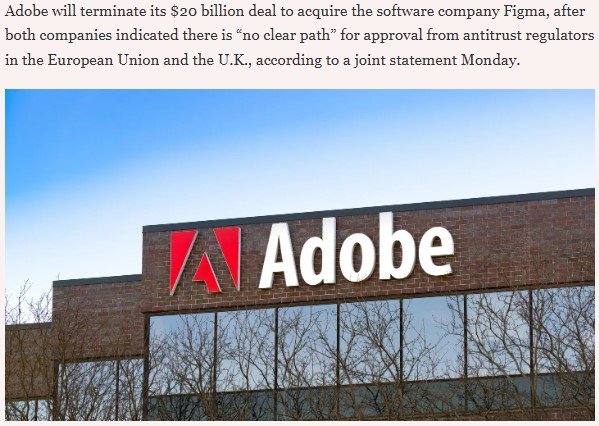
On September 15, 2022, Adobe announced it would acquire Figma for about $20 billion, with closing expected in 2023, subject to regulatory approvals (Adobe). It never closed. On December 18, 2023, the companies ended the deal, citing no clear path to approval from European and UK regulators, and Adobe paid Figma a $1 billion termination fee (Forbes). Microsoft’s deal closed; Adobe’s didn’t. Both started as identical-sounding headlines.
How to Verify Earnings and Financial Results
Check the official earnings release, the quarterly or annual report, the reporting period, GAAP versus adjusted (non-GAAP) figures, the comparison period, and guidance.
Adjusted numbers can look very different from reported ones. In its second quarter of 2026, Fiserv reported GAAP diluted EPS of $1.17 and adjusted EPS of $1.84 (SEC). A headline quoting only one tells half the story. Our guide on how to analyze business news walks through that release step by step.
How to Verify Layoff News
Check the company announcement, regulatory filings, and whether the numbers are confirmed or estimated. In the US, the WARN Act generally requires employers with 100 or more employees to give at least 60 calendar days’ written notice before a plant closing or mass layoff, including to the state dislocated worker unit (US Department of Labor). Many states publish these notices, so they can confirm a reported layoff. Not every job cut triggers WARN, though, so a missing notice doesn’t prove a story false.
How to Verify Stock-Market Claims
Check the exact date and time, the exchange and security, percentage versus point moves, intraday versus closing price, how the broader market moved, and whether there was a company-specific catalyst.
On April 23, 2013, a false post from the hacked Associated Press Twitter account claimed there had been explosions at the White House. The Dow fell about 143 points, and the S&P 500 briefly lost more than $136 billion in value before prices recovered (University at Buffalo). A story quoting only the low point, without the time or the recovery, would mislead.
How to Verify Regulatory or Legal News
Check the regulator or court, the official order or filing, the case or rule’s current status, and two distinctions: allegation versus finding, and proposed rule versus final rule. A lawsuit’s complaint contains allegations, not proven facts. In the US federal process, a proposed rule is published in the Federal Register for public comment, typically for 30 to 60 days, and a final rule is published later with an effective date (Federal Register). “Agency proposes rule” and “agency adopts rule” are different stories.
How to Evaluate the Reliability of a Business News Source
Look at the Publication
Check for editorial transparency, named authors, a corrections policy that is actually used, clear sourcing practices, visible dates, and real contact information. For an unfamiliar outlet, leave its website and see what others say about it. A Stanford study found that professional fact checkers outperformed historians and students at judging websites because they read “laterally,” opening new tabs to check a source’s reputation (Stanford).
Look at the Individual Article
Check for named sources, links to evidence, numbers with a cited origin, and a clear line between fact and speculation.
Beware of Anonymous Sources
Anonymous sourcing isn’t automatically false. Early reports of deals, like many merger scoops, often come from people who can’t be named. Anonymous sources can provide legitimate reporting, but readers should understand what is actually attributed to them and whether independent evidence supports the claim. Treat it as reported but unconfirmed until a filing or official statement backs it up.
Common Red Flags in Business News
| Red flag | Why it matters |
| Sensational headline | May exaggerate the underlying facts |
| No original source | The claim is difficult to verify |
| Old story presented as new | The context may be misleading |
| Unnamed source only | The evidence is harder to assess independently |
| Exact numbers without a citation | The numbers can’t be traced |
| Forecast presented as fact | Expectations are not confirmed events |
| Many sites repeating identical wording | The story may come from one source |
| “Experts say” without names | You can’t assess the expertise |
| Screenshot instead of the original document | Context may be missing, or the image may be edited |
What to Do When You Cannot Fully Verify a Business Story
Verification isn’t always yes or no. Place each story at the confidence level the evidence supports.
| Confidence level | What it means |
| Confirmed | Supported by strong primary evidence, such as a filing, official data, or a court record |
| Corroborated | Reported by credible independent sources with supporting evidence |
| Reported but unconfirmed | A credible report exists, but primary confirmation isn’t available yet |
| Speculative | Based mainly on expectations, rumors, predictions, or interpretation |
The wording often tells you the level: completed and filed describe events on the record; announced and agreed describe intentions; reported means a news organization is citing its sources; expected and forecast are predictions; alleged is a claim in a dispute, not a finding.
How to Verify Business News Quickly
The 30-Second Check
When You Need Deeper Verification
Go further for acquisitions, investment decisions, financial claims, regulatory developments, legal disputes, and any announcement that could materially affect a business decision.
Business News Verification Tools and Sources
- Primary sources confirm what happened or was filed: company investor relations pages, regulatory filings (in the US, the SEC’s EDGAR database), government databases, court records, and official statistics.
- Secondary sources add independent reporting and interpretation: established business publications, trade publications, and financial research.
- Data sources let you recheck the numbers: financial statements, government datasets, and market data.
Use primary sources to confirm the event, secondary sources to understand context, and data sources when a story’s argument rests on a figure you can recalculate.
What Business News Verification Can and Cannot Establish
Verification can establish whether a statement was made, whether a filing exists, whether a transaction was announced, whether a number appears in a report, and when an event occurred.
Verification may not establish whether a forecast will come true, whether a strategy will succeed, what an executive privately intended, or whether a market will rise or fall. That is interpretation, and our guide on how to analyze business news covers it.
How to Verify Business News: A Simple Checklist
Before trusting a business story, ask:
- What exactly happened?
- When did it happen?
- Who originally reported it?
- What is the primary source?
- Can I find the original document?
- Are the numbers supported?
- Is the information confirmed or expected?
- Are independent sources reporting it?
- Is important context missing?
- Has the story been updated or corrected?
Frequently Asked Questions
What is the best way to verify business news?
Identify the exact claim, then trace it to its original source, such as a company filing, regulatory announcement, or official dataset. Check the date and the numbers against that document, and look for confirmation from sources that reached the information independently.
How to verify business news as a beginner?
Start with one story. Find the company’s own release or the official dataset behind it, compare each number in the article with that document, and check the date. Use the 30-second check above until it becomes a habit.
How do I find the original source of a business news story?
Follow attribution phrases such as “the company said” or “according to a filing,” and click every link the article provides. Then search the company’s investor relations page or a regulatory database, such as the SEC’s EDGAR system, for the underlying document.
How can I tell if business news is reliable?
Check whether the publication names its authors, links to evidence, logs corrections, and separates facts from opinion. Then check the article itself: named sources, cited numbers, and a claim you can trace to a primary document. Reliable outlets still make mistakes.
Should I trust news reported by multiple websites?
Not automatically. Many websites repeat the same press release or wire story, so ten articles may represent one source. Look for reports that cite different evidence, such as a filing or a regulator’s statement, before treating a claim as independently confirmed.
How do I verify whether a company announcement is true?
Confirm it came from the company, through its investor relations page, newsroom, or a regulatory filing, not just a social media account. Remember that the announcement proves what the company said. Forecasts and explanations inside it still need independent evidence.
How can I tell whether business news is confirmed or speculative?
Read the verbs. “Completed,” “filed,” and “reported results” describe events on the record. “Expects,” “plans,” “may,” and “according to people familiar with the matter” describe intentions, forecasts, or unconfirmed reports.
What are the biggest red flags in business news?
A sensational headline, no original source, an old story presented as new, numbers without citations, forecasts written as facts, uncorroborated anonymous sources, and many sites repeating identical wording. Each is a reason to check before relying on the claim.
Final Takeaway
Don’t ask only, “Is this article from a reputable website?” Ask: What is the claim? Who made it? What is the original evidence? Can the numbers be verified? Has independent evidence confirmed the important parts?
Those five questions are how to verify business news with confidence. Once a story passes them, the next step is understanding what it means, which is where our guide on how to analyze business news begins.