Fake financial news examples include a fake press release that wiped $2.2 billion off Emulex in 2000, a hacked Associated Press tweet that briefly erased more than $136 billion from the S&P 500 in 2013, a fake takeover filing that lifted Avon 20% in 2015, a hacked SEC account that falsely announced bitcoin ETF approvals in 2024, and a false tariff-pause post that sent the S&P 500 up more than 6% in about 30 minutes in 2025. Each moved prices within minutes, and each failed the same basic check: the claim never appeared where a real announcement would have been published.
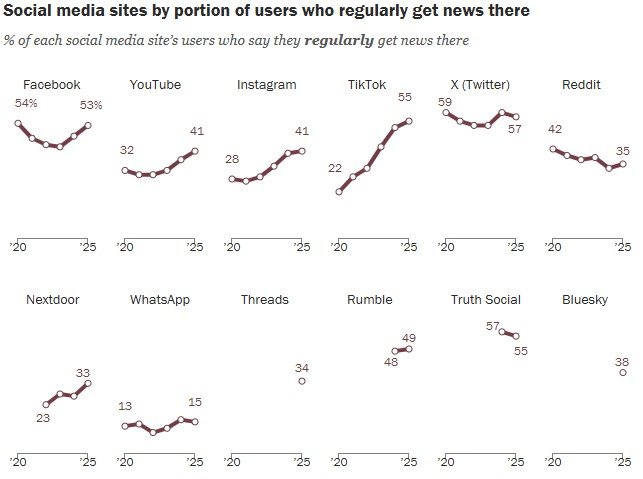
The risk is growing. The Reuters Institute’s 2026 Digital News Report found that 54% of people across 48 markets now get news from social media and video networks, while only 25% of Americans trust most news most of the time (Reuters Institute). In the US, 53% of adults get news from social media at least sometimes (Pew Research Center), which is where most of these hoaxes started.
Fake Financial News Examples: Key Facts
- The biggest market-wide hit: In 2013, a false tweet from the hacked Associated Press account briefly erased more than $136 billion from the S&P 500.
- The biggest single-stock hit: In 2000, a fake press release cut Emulex’s market value by about $2.2 billion in 16 minutes.
- The most common channel is social media: Five of the eight hoaxes in this guide spread through hacked, impostor, or anonymous social media accounts.
- Most moves reverse quickly: In at least six of the eight cases, prices gave back most of the move the same day, once the claim was denied.
- Every hoax lacked a primary document: None of the claims appeared in a company release, an official statement, or a genuine regulatory filing.
- Official databases can be used too: In 2015, a fake takeover offer for Avon was filed on the SEC’s own EDGAR system.
- Creating a hoax can be a crime: The person behind the 2024 SEC account hack was sentenced to 14 months in prison.
What Is Fake Financial News?
Fake financial news is false information about a company, market, or economic event that is presented as real and can influence investment decisions. Some is created to manipulate prices for profit. Some spreads when people share a convincing post without checking it.
Fake News vs. Rumors vs. Disputed Reports
These terms are often used interchangeably, but they mean different things:
| Term | What it means | Example in this guide |
| Hoax | Deliberately false information created to deceive | Emulex press release, Avon filing |
| Misinformation | False information spread without intent to deceive | People sharing the AI Pentagon image |
| Unverified rumor | A claim with no confirmed source that may or may not be true | The 2025 tariff-pause post |
| Disputed report | A sourced news report that a company or official denies | The 2026 Tesla report |
| Denial | A statement that a report is false; itself a claim that needs evidence | Musk calling a report “fake news” |
8 Fake Financial News Examples at a Glance
| Year | Company or market | How the fake spread | What it claimed | Market impact |
| 2000 | Emulex | Fake press release on a wire service | CEO resigned, SEC probe, earnings restated | About $2.2 billion in market value lost in minutes |
| 2013 | US stock market | Hacked AP Twitter account | Explosions at the White House | S&P 500 briefly lost more than $136 billion |
| 2015 | Avon | Fake takeover filing on SEC’s EDGAR | $18.75-a-share buyout offer | Shares rose 20% |
| 2015 | Cloned Bloomberg website | $31 billion takeover bid | Shares jumped nearly 8% | |
| 2022 | Eli Lilly | Impostor account with a paid checkmark | “Insulin is free now” | Shares fell more than 4% the next day |
| 2023 | US stock market | AI-generated image shared by verified accounts | Explosion near the Pentagon | Major indexes briefly dipped |
| 2024 | Bitcoin | Hacked SEC account on X | Spot bitcoin ETFs approved | Bitcoin rose toward $48,000, then fell to about $45,000 |
| 2025 | US stock market | Unverified post on X | 90-day tariff pause under consideration | S&P 500 jumped more than 6% in about 30 minutes, then gave back most gains |
The Fake Financial News Examples in Detail
Each case covers what happened, the market reaction, how the truth came out, and the check that would have caught it.
1. Emulex: The Fake Press Release (2000)
What happened: At 9:30 a.m. on August 25, 2000, a fake press release went out through Internet Wire claiming that Emulex’s CEO had resigned, that the SEC was investigating its accounting, and that the company would restate its earnings to report a loss (SEC).
Market reaction: Emulex shares fell about $61 each within 16 minutes, temporarily wiping out roughly $2.2 billion in market value.
How the truth came out: Nasdaq halted trading after Emulex said the release was false. When trading resumed later that day, the stock rebounded to close at $105.75. The SEC traced the hoax to Mark Jakob, who had recently worked at Internet Wire and had bet against Emulex shares. According to the SEC, he made more than $241,000 from the scheme and was arrested by the FBI (SEC).
What would have caught it: The release appeared on a wire service, but not on Emulex’s own website or in an SEC filing. A CEO resignation and an earnings restatement are exactly the kind of events a company reports itself.
2. The Associated Press: The Hacked Tweet (2013)
What happened: At 12:07 p.m. on April 23, 2013, hackers used the Associated Press’s verified Twitter account to post that two explosions at the White House had injured President Obama (IEEE Spectrum).
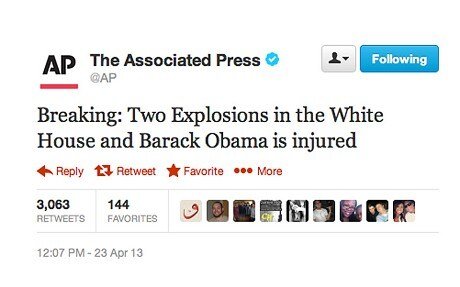
Market reaction: The post was retweeted about 4,000 times within five minutes. The Dow Jones Industrial Average fell 143.5 points, and the S&P 500 lost more than $136 billion in value (University at Buffalo).
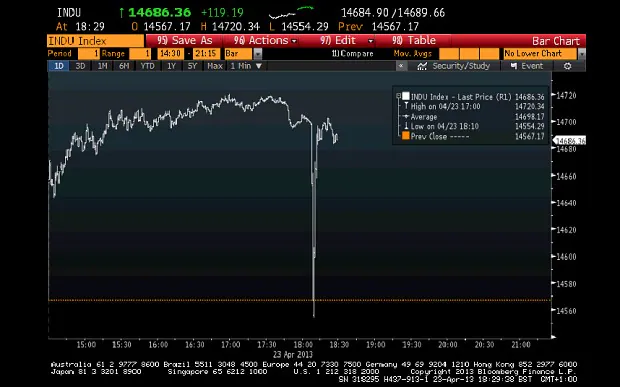
How the truth came out: AP and the White House said the report was false, and prices recovered within minutes.
What would have caught it: The source was trusted, but the channel was compromised. No other news organization, no AP story on its website, and no official White House statement confirmed it.
3. Avon: The Fake Takeover Filing (2015)
What happened: In May 2015, a company called PTG Capital Partners filed a document on EDGAR, the SEC’s own filing system, offering to buy Avon for $18.75 a share, nearly triple its previous closing price of $6.67 (TheStreet).
Market reaction: Avon stock rose 20% on May 14 (SEC).
How the truth came out: Avon said it had received no offer or communication from such a company. The SEC later traced the filing to Bulgaria, charged a trader and several companies, and froze about $2 million in brokerage accounts.
What would have caught it: EDGAR accepts filings before reviewing them, so a document’s presence there doesn’t prove it’s genuine. The buyer had no track record, and the attorney named in the filing couldn’t be found. A deal worth billions from an unknown firm deserved a closer look.
4. Twitter: The Cloned Bloomberg Website (2015)
What happened: On July 14, 2015, a fake story claiming Twitter had received a $31 billion takeover bid appeared on bloomberg.market, a domain designed to look like Bloomberg’s real website (NBC News).
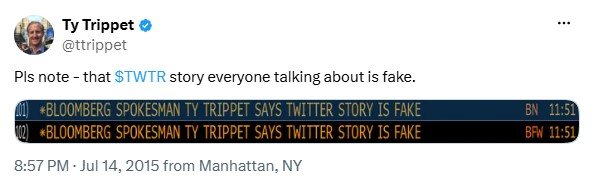
Market reaction: Twitter shares jumped nearly 8% before settling at about a 3% gain.
How the truth came out: Both Bloomberg and Twitter denied the report. The domain had been registered only days earlier.
What would have caught it: The web address. Bloomberg publishes at bloomberg.com, and a scoop of that size would have appeared on Bloomberg’s terminal and main site, then been picked up by other outlets within minutes.
5. Eli Lilly: The Impostor Account (2022)
What happened: On November 10, 2022, days after Twitter began selling blue checkmarks for $8 a month, an account called @EliLillyandCo posted: “We are excited to announce insulin is free now” (Forbes).
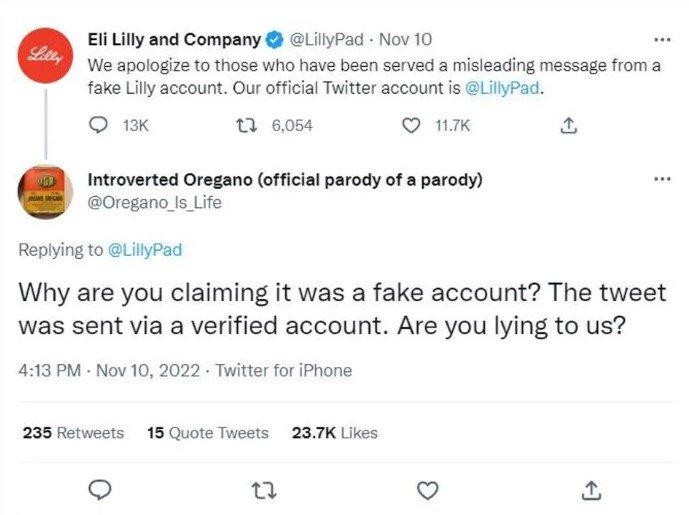
Market reaction: Lilly shares fell more than 4% the next day. Rival insulin makers Novo Nordisk and Sanofi also fell, so the fake post may not explain the whole drop (Semafor).
How the truth came out: Eli Lilly’s real account, @LillyPad, apologized for the “misleading message from a fake Lilly account.”
What would have caught it: A checkmark is not verification. A price change on a company’s main product would appear on its investor relations page and in a press release.
6. The Pentagon: The AI-Generated Image (2023)
What happened: On May 22, 2023, an image showing black smoke near a building, described as an explosion at the Pentagon, spread across social media. Verified accounts shared it, including one impersonating Bloomberg News (NPR).
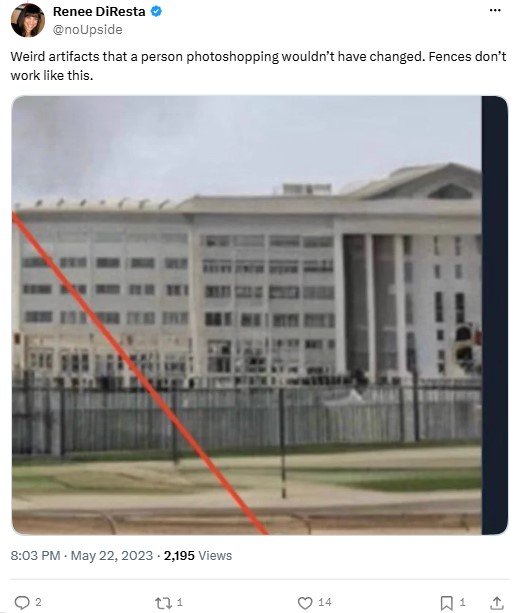
Market reaction: Major US stock indexes briefly dipped before recovering.
How the truth came out: The Pentagon Force Protection Agency and the Arlington County Fire Department said there was no explosion or incident at or near the Pentagon. Analysts pointed to signs of AI generation, such as a fence that melted into crowd barriers.
What would have caught it: A real explosion at the Pentagon would produce many photos and videos from different angles, plus official statements. There was only one image, with no eyewitnesses.
7. The SEC: The Hacked Regulator Account (2024)
What happened: On January 9, 2024, the SEC’s official X account posted that the agency had approved spot bitcoin exchange-traded funds. SEC Chair Gary Gensler quickly said the account “was compromised, and an unauthorized tweet was posted” (CBS News).
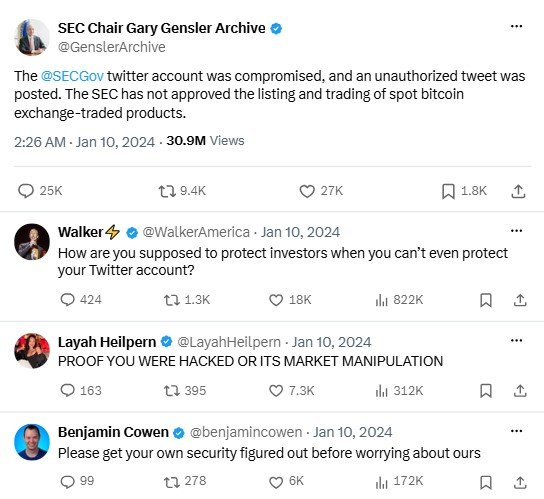
Market reaction: Bitcoin rose from about $46,730 to nearly $48,000, then fell to about $45,000 after the denial.
How the truth came out: The SEC said no approval had been granted. It actually approved spot bitcoin ETPs the next day, on January 10, 2024 (SEC). The hacker, Eric Council Jr., took over a phone number linked to the account through a SIM swap. He pleaded guilty and was sentenced in May 2025 to 14 months in prison (CoinDesk).
What would have caught it: Regulators announce decisions through official orders and statements on their websites. The post linked to nothing.
8. The Tariff Pause That Wasn’t (2025)
What happened: On the morning of April 7, 2025, as markets were falling sharply over new US tariffs, National Economic Council Director Kevin Hassett was asked on Fox News whether President Trump might pause tariffs for 90 days. He replied, “I think the president will decide what the president is going to decide.” Around 10 a.m. ET, a popular anonymous X account called Walter Bloomberg posted that Hassett had said Trump was considering a 90-day pause. The claim spread quickly and was repeated on CNBC, which later issued an on-air correction (Fortune, Fox Business).
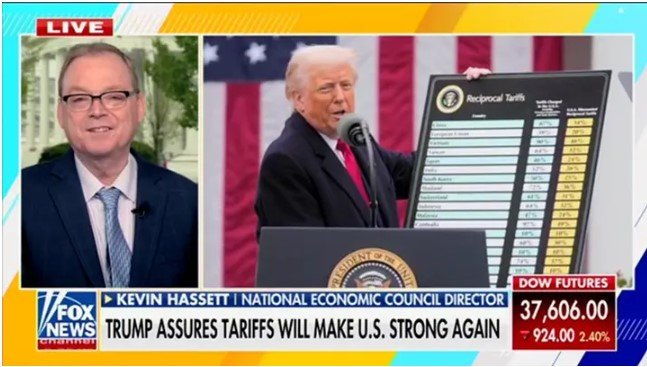
Market reaction: The S&P 500 jumped more than 6% in about 30 minutes (Forbes).
How the truth came out: About an hour after the post, the White House called the report “fake news,” the account deleted it, and stocks gave back most of the gains. Two days later, on April 9, Trump did announce a 90-day pause for most countries, excluding China (PolitiFact).
What would have caught it: Reading the actual quote, which didn’t say what the post claimed. A policy change of that size would come from the White House, not secondhand from an anonymous account. Like the SEC case, the news later became “almost true,” but it wasn’t true yet.
Is Every “Fake News” Claim a Hoax? A 2026 Case
No. Sometimes “fake news” is itself the unverified claim. On July 30, 2026, The Wall Street Journal reported, citing people familiar with the matter, that some Tesla executives had been told to prepare for separating the company’s China business amid talk of combining Tesla and SpaceX. Tesla shares rose 2.3% in after-hours trading (Investing.com). Elon Musk responded: “This has never even come up in a discussion ever. Absurdly fake news” (Yahoo Finance).
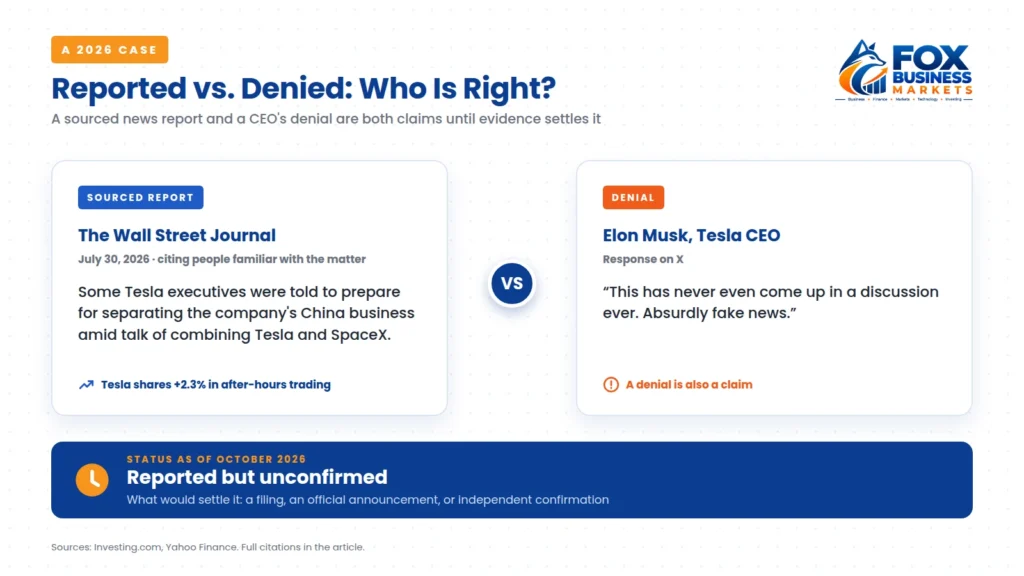
This is a disputed report, not a proven hoax. A sourced story from an established newspaper is being denied by the company’s CEO, and neither side has proved its version. The accurate label for now is reported but unconfirmed. What settles it is the same thing that settles every case in this guide: a filing, an official announcement, or independent confirmation. As of late September 2026, Tesla had made no official announcement or SEC filing about a SpaceX merger or a China separation (Electrek).
What Do These Fake Financial News Examples Have in Common?
They share five patterns, and the most important is the missing primary document.
| Pattern | Examples | Why it works |
| A trusted name | AP, Bloomberg, the SEC, Eli Lilly | People react to the brand before checking the source |
| A dramatic claim | Takeovers, explosions, approvals, free insulin | Big claims trigger fast trades |
| Speed | AP’s tweet spread about 4,000 times in five minutes | Prices move before anyone can verify |
| No primary document | No filing, no official statement, no company release | The evidence that should exist is missing |
| A plausible story | Bitcoin ETFs and a tariff pause were widely discussed | Believable hoaxes are the most dangerous |
How Can You Spot Fake Financial News?
Check for the primary evidence a real event would leave behind. Each check below would have exposed at least one hoax:
| Check | Would have caught |
| Is it on the company’s investor relations page or newsroom? | Emulex, Eli Lilly |
| Is there a filing, and does the filer have a real history? | Emulex, Avon |
| Is the web address exactly right? | Twitter (bloomberg.market) |
| Does the quote actually say what the headline claims? | Tariff pause |
| Are other major outlets reporting it independently? | AP, Twitter, Pentagon |
| Is there an official statement from the regulator or agency? | SEC, Pentagon, tariff pause |
| Is there more than one photo, video, or eyewitness? | Pentagon |
For the full process, see our guide on how to verify business news.
What Should You Do If You See Market-Moving News You Can’t Confirm?
Wait for the primary source before you act. Then:
- Don’t trade on the first post. A real announcement will still be real in ten minutes.
- Go to the source directly. Type the company’s or agency’s web address yourself instead of clicking a link.
- Look for a second, independent outlet reporting it with its own sources.
- Check the account or website: the handle, the domain, and how new it is.
- Report it. Flag impostor accounts to the platform. Suspected manipulation can be reported to the SEC through its Tips, Complaints and Referrals portal.
What Happens to People Who Create Fake Financial News?
Creating false information to move a stock price can be securities fraud, and several of these cases led to enforcement:
- Emulex (2000): The SEC charged Mark Jakob with securities fraud, and the FBI arrested him (SEC).
- Avon (2015): The SEC charged a Bulgarian trader and several companies and froze about $2 million (SEC).
- SEC account hack (2024): Eric Council Jr. was sentenced to 14 months in prison (CoinDesk).
Sharing a fake post by mistake is different, but a false headline can cost traders money either way.
What These Examples Can and Cannot Tell Us
These cases can show: how fake financial news spreads, how fast prices react, and which checks would have exposed each hoax.
They cannot show:
- How common hoaxes are. We only know about the ones that were caught and widely reported.
- Exactly how much each hoax caused. Prices move for many reasons at once. When Eli Lilly fell, rivals Novo Nordisk and Sanofi fell too.
- That every denied story is fake. As the 2026 Tesla case shows, a denial is a claim, not proof.
Frequently Asked Questions
What are some fake financial news examples?
Well-known fake financial news examples include the Emulex fake press release (2000), the hacked AP tweet about White House explosions (2013), the fake Avon takeover filing (2015), a cloned Bloomberg site reporting a Twitter takeover (2015), the Eli Lilly impostor account (2022), an AI-generated Pentagon explosion image (2023), the hacked SEC X account (2024), and the false 90-day tariff-pause report (2025).
Can fake news really move the stock market?
Yes, usually for a short time. In April 2025, a false tariff-pause post sent the S&P 500 up more than 6% in about 30 minutes before the White House denied it. Single stocks can move even more: Emulex lost about $2.2 billion in market value in 16 minutes after a fake press release.
How can I tell if a financial news story is fake?
Check whether the claim appears on the company’s investor relations page, in an SEC filing, or in an official statement. Confirm the website address is exactly right, and look for independent reporting from other major outlets. Our guide on how to verify business news explains each step.
Can a fake filing appear on the SEC’s EDGAR system?
Yes. In 2015, a fake takeover offer for Avon was filed on EDGAR and lifted the stock 20% before Avon said it had received no such offer. A document on EDGAR shows that something was filed, not that it is genuine. Check the filer’s history and the company’s response.
Are verified social media accounts reliable for financial news?
Not on their own. Verified accounts have been hacked, as with AP in 2013 and the SEC in 2024, and paid checkmarks allowed an impostor to pose as Eli Lilly in 2022. Treat any market-moving post as unconfirmed until it appears in an official source.
Is spreading fake financial news illegal?
Creating false information to manipulate a stock price can be securities fraud. The SEC has charged people in cases such as the Emulex and Avon hoaxes, and the SEC account hacker was sentenced to prison. Sharing something by mistake is different, but it can still cause others to lose money.
Final Takeaway
These fake financial news examples come from different decades and platforms: a wire service, Twitter, EDGAR, a cloned website, an AI image, and an anonymous X account. The lesson is the same in each. Before you react to a market-moving headline, ask: Who made the claim? Where is the original document? Is the website or account exactly who it says it is? Has anyone independent confirmed it?
When the trail of primary evidence is missing, the headline isn’t news yet. To build that habit, start with our guide on how to verify business news, then learn how to analyze business news once you know a story is real.