The best small business ideas for people on a budget are service businesses you can run from home with skills you already have: cleaning, lawn care, pet care, senior care, tutoring, personal training, web design, and more. They need little equipment, no storefront, and often no employees, so you can test demand before you spend much money.
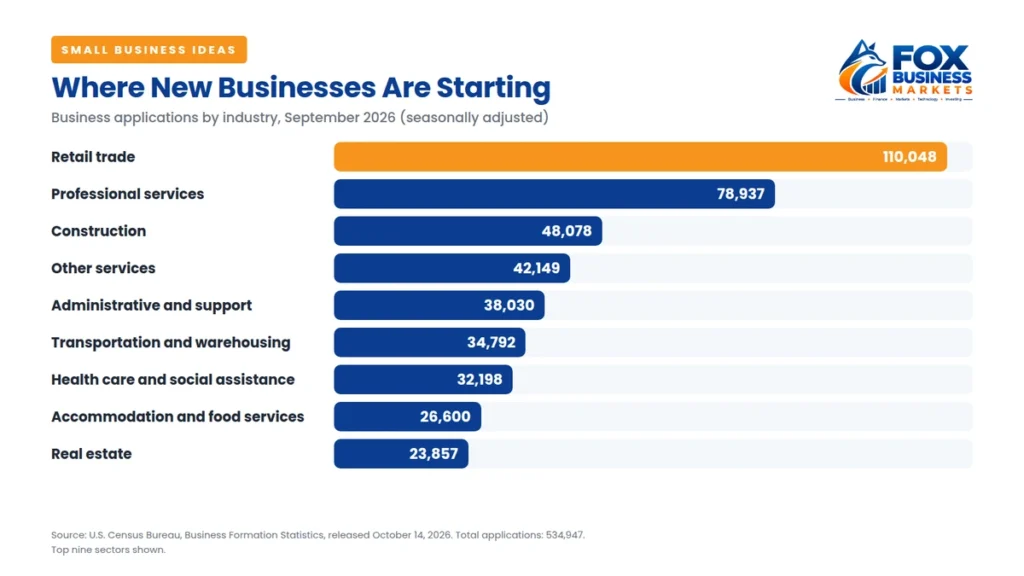
Plenty of people are taking that path. Americans filed 534,947 business applications in September 2026 alone, seasonally adjusted (Census Bureau). Below are 15 low-cost small business ideas, with real pay and growth data from the Bureau of Labor Statistics (BLS) so you can see which fields are growing.
Key Takeaways
- About half of employer businesses started with less than $25,000, and 24.1% started with less than $5,000, according to Census data reported by the SBA.
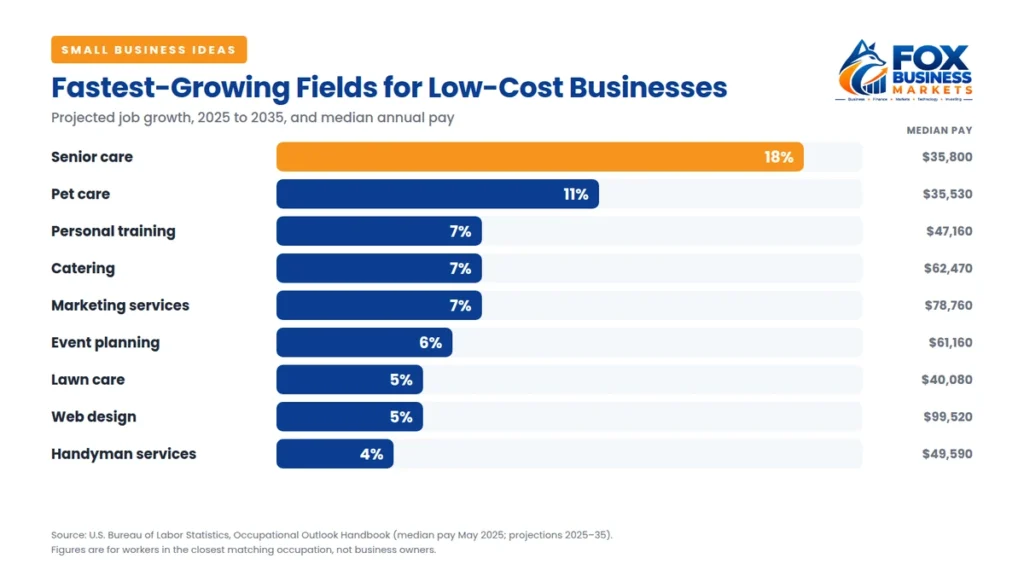
- Home care is the fastest-growing field on this list, with projected job growth of 18% from 2025 to 2035.
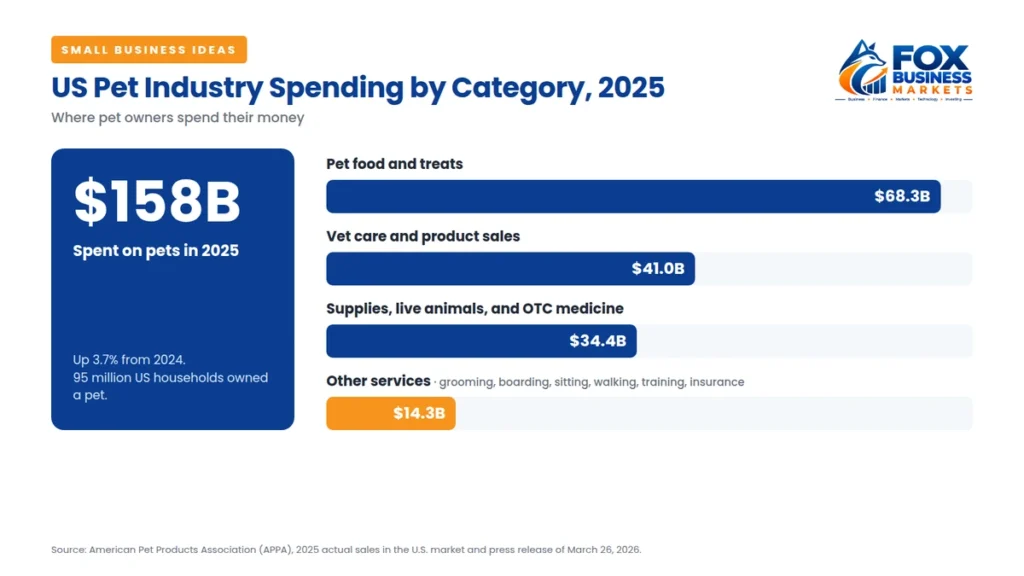
- Americans spent $158 billion on their pets in 2025, including $14.3 billion on services such as grooming, boarding, and walking.
- Some ideas, like home childcare or interior design, may require a state license. Always check your state and city rules.
How We Researched This
To pick these small business ideas, we used official data: the BLS Occupational Outlook Handbook for median pay (May 2025) and projected job growth (2025 to 2035), the Census Bureau for business formation and population data, the SBA Office of Advocacy for startup costs, the IRS for home office rules, and the American Pet Products Association (APPA) for pet spending. BLS pay figures are for workers in each field, not business owners, so treat them as a guide to demand and pricing, not a promise of income.
Small Business Ideas at a Glance
| Idea | Related BLS field | Median pay | Projected growth, 2025–35 |
| House cleaning | Maids and housekeeping cleaners | $35,510 | Not published |
| Lawn care | Grounds maintenance workers | $40,080 | 5% |
| Pet care | Animal care and service workers | $35,530 | 11% |
| Senior care | Home health and personal care aides | $35,800 | 18% |
| Tutoring | Tutors | $43,350 | 0% |
| Personal training | Fitness trainers and instructors | $47,160 | 7% |
| Web design | Web developers and digital designers | $99,520 | 5% |
| Marketing services | Market research analysts | $78,760 | 7% |
| Event planning | Meeting, convention, and event planners | $61,160 | 6% |
| Handyman services | General maintenance and repair workers | $49,590 | 4% |
| Catering | Chefs and head cooks | $62,470 | 7% |
| Photography | Photographers | $44,660 | −1% |
| Translation | Interpreters and translators | $60,170 | 2% |
Sources: BLS Occupational Outlook Handbook; house cleaning pay from O*NET, based on BLS 2025 wage data (O*NET). Car detailing and online stores have no matching BLS profile.
15 Low-Cost Small Business Ideas
1. House Cleaning
Cleaning is one of the simplest small business ideas to start: you need supplies, reliable transportation, and a few first clients. Start with homes in your area, then add offices or move-out cleanings. Liability insurance and a bond help win trust, since you’ll work inside people’s homes.
2. Lawn Care and Landscaping
A mower, trimmer, and blower are enough to begin. Grounds maintenance jobs are projected to grow 5% from 2025 to 2035, faster than average, with a median pay of $40,080 (BLS). Recurring weekly contracts give you steady income, and you can add snow removal or seasonal cleanups in colder areas.
3. Pet Sitting and Dog Walking
Pet owners spend heavily. US pet industry spending reached $158 billion in 2025, and 95 million households owned a pet (APPA). Animal care jobs are projected to grow 11%, much faster than average (BLS). You can start with walking and drop-in visits, then add overnight sitting or grooming.
4. Senior Care (Non-Medical Home Care)
The 65-and-older population reached 64.6 million in 2025, up 16.2% since 2020 (Census Bureau). Home health and personal care aide jobs are projected to grow 18%, the fastest on this list (BLS). Non-medical help, such as companionship, errands, and meal prep, often has lighter rules than medical care, but requirements vary by state.
5. Tutoring
If you’re strong in a school subject, test prep, music, or a language, tutoring needs little more than a laptop and a quiet space. Tutors earn a median of $43,350, though BLS projects little change in tutor jobs (BLS). Online sessions let you reach students far beyond your town.
6. Personal Training
Fitness trainer jobs are projected to grow 7%, much faster than average, with a median pay of $47,160 (BLS). You can train clients at their homes, in parks, or online. Most clients and gyms expect a recognized certification.
7. Web Design
Web developers and digital designers earn a median of $99,520, the highest pay on this list, and jobs are projected to grow 5% (BLS). Your main costs are a computer, software, and a portfolio site. Local businesses that need a simple, fast website are a good first market.
8. Social Media and Marketing Services
Many small businesses know they need marketing but don’t have time for it. You can manage social media accounts, write emails, or run ads. The closest BLS field, market research analysts, is projected to grow 7% (BLS). Start with one or two clients and use their results as proof.
9. Event Planning
Event planners are projected to grow 6%, with a median pay of $61,160 (BLS). Start with birthdays, small weddings, or company events, and build a network of venues, caterers, and photographers. Strong organization matters more than startup money.
10. Handyman Services
Basic tools, a vehicle, and a reputation for showing up on time can build a steady business. General maintenance and repair jobs are projected to grow 4%, with a median pay of $49,590 (BLS). Check your state’s contractor rules, since many limit the size or type of job you can do without a license.
11. Catering and Meal Prep
Chefs and head cooks earn a median of $62,470, and jobs are projected to grow 7% (BLS). Catering small events or preparing weekly meals costs far less than opening a restaurant. You’ll usually need a food handler’s permit and a licensed commercial kitchen, which many cities rent by the hour.
12. Photography
Photographers are one of the most self-employed groups: 67% work for themselves (BLS). The field is crowded and BLS projects a slight decline in jobs, so pick a niche, such as real estate, headshots, products, or events.
13. Translation
If you’re fluent in two languages, translation and interpreting can be done from home. The median pay is $60,170 (BLS). Specializing in legal, medical, or business documents helps you charge more, though some of that work requires certification.
14. Mobile Car Detailing
With cleaning products, a vacuum, and a pressure washer, you can wash and detail cars at customers’ homes or offices. Offer monthly plans for steady income, and check local rules on water runoff before you start.
15. Online Store and Reselling
Retail is where most new businesses start. Retail trade had 110,048 business applications in September 2026, more than any other sector (Census Bureau). Selling handmade goods, print-on-demand products, or resold items online lets you start small and grow your inventory only as sales come in.
How to Choose the Right Small Business Idea
The best small business ideas match three things: your skills, local demand, and how much time and money you have. Before you commit:
- List what you already do well. A skill you have saves training costs.
- Check demand. Look at local competitors, their prices, and their reviews.
- Run the numbers. Our business idea profit calculator shows whether your price leaves enough profit.
- Test before you invest. Land one or two paying customers before buying equipment or a website.
- Start part-time if you can. For 37% of nonemployer businesses, the business is the owner’s only job (Federal Reserve), which means most owners have another job too.
How Much Money Do You Need to Start?
Less than many people think. In Census survey data reported by the SBA Office of Advocacy, 24.1% of employer businesses started with less than $5,000, and about half started with less than $25,000 (SBA Office of Advocacy). That data covers businesses in 2017, before the pandemic, so today’s costs may be higher. Businesses without employees usually need even less: only 17% used more than $25,000 to start (SBA Office of Advocacy).
Most owners use their own money. If you need more, see our guide to small business loans, and estimate your total with our startup cost calculator.
Licenses and Home-Based Business Rules
Even low-cost small business ideas come with paperwork. According to the SBA, “most small businesses need a combination of licenses and permits from both federal and state agencies” (SBA). Keep these points in mind:
- Zoning still applies at home. The SBA notes that “zoning ordinances can still apply even to home-based businesses,” so check with your city.
- Some fields need a license. For example, BLS notes that many states require home childcare businesses to be licensed, and interior design licensing varies by state.
- You may get a home office deduction. The IRS simplified option lets you deduct $5 per square foot of home used regularly and exclusively for business, up to 300 square feet (IRS).
For the full setup process, follow our guide on how to start a small business.
Frequently Asked Questions
What is the most profitable small business to start with little money?
Service businesses that use skills you already have are usually the most profitable, because costs stay low. Web design has the highest median pay on our list at $99,520, while senior care is the fastest-growing field.
What small business can I start from home?
Tutoring, web design, marketing services, translation, and online stores can all be run from home. Check local zoning rules first, since they can apply to home-based businesses.
How much money do I need to start a small business?
It depends on the idea. About half of employer businesses started with less than $25,000, and nearly a quarter with less than $5,000, according to Census data reported by the SBA.
What is the easiest business to start?
Cleaning, lawn care, pet sitting, and handyman services are among the easiest, because they need basic tools, little training, and no storefront.
Which small business ideas are growing fastest?
Based on BLS projections for 2025 to 2035, home care (18%), pet care (11%), fitness training (7%), and catering-related cooking jobs (7%) are growing much faster than average.
Do I need a license for a small business?
Most businesses need at least a general business license, and some fields need more, such as childcare or skilled trades. Check your state and city websites before you open.
Final Takeaway
The best small business ideas don’t require a big budget. They use a skill you already have, meet a real local need, and let you start small. Pick an idea that fits your strengths, test it with real customers, keep costs low, and grow as the money comes in. For more data on how small businesses are doing, see our roundup of small business statistics.