A plumber decides it’s time to get serious about marketing. He spends $1,500 on Facebook ads in a month and gets two phone calls, one of them a wrong number. Meanwhile, the free Google listing he set up years ago and never touched is still sending him a few jobs a week, even with an old phone number and no photos.
That story plays out in thousands of small businesses. Owners jump straight to paid ads because they feel like “real” marketing, and skip the free basics that actually bring in local customers. Good digital marketing for small business usually works in the opposite order: build the foundation first, then pay to amplify what’s already working. Here’s how to do that, channel by channel, with honest numbers on what it costs.
Where Your Customers Actually Are
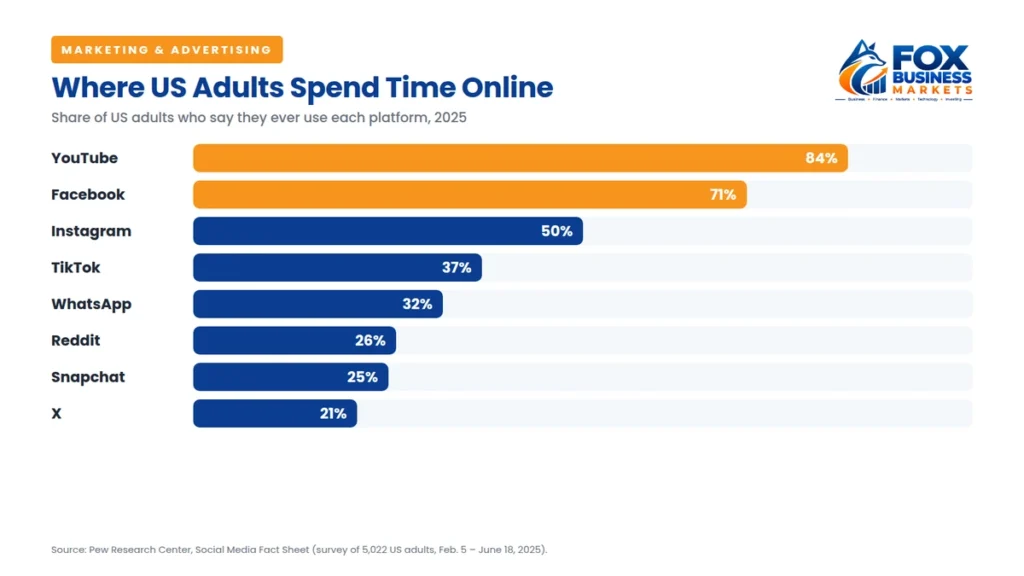
Before you pick a channel, look at where people spend their time. Pew Research Center’s 2025 survey of more than 5,000 US adults found that 84% use YouTube and 71% use Facebook. Instagram reached 50%, TikTok 37%, and Reddit 26% (Pew Research Center). In Pew’s most recent figures for other platforms, 36% used Pinterest and 32% used LinkedIn (both 2024).
Advertising money follows that attention. US internet advertising revenue reached $294.6 billion in 2025, up 13.9% from the year before, according to the IAB and PwC. Social media advertising brought in $117.7 billion, search $114.2 billion, and digital video $78 billion (IAB).
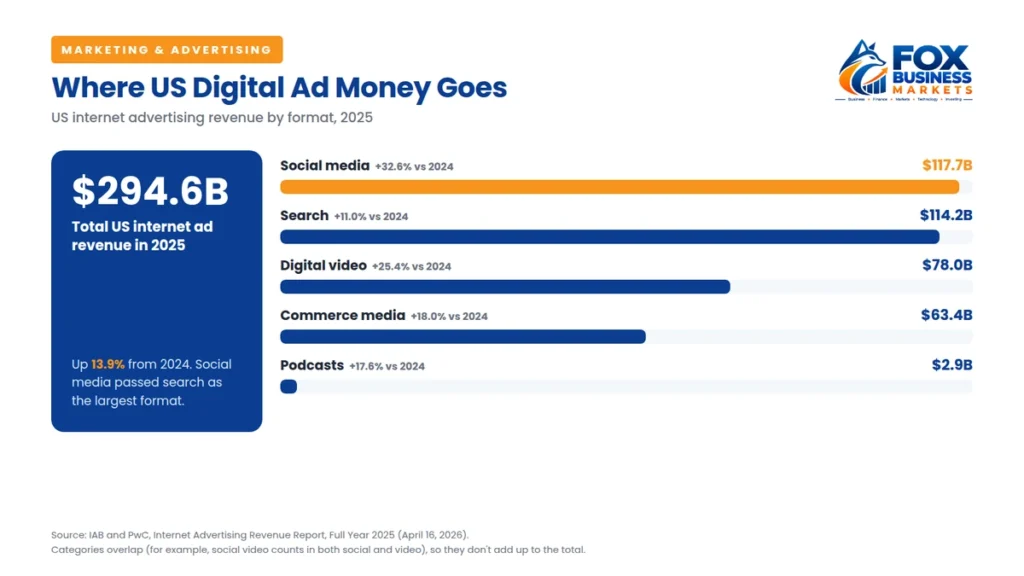
Those are national numbers, though. A wedding photographer and a commercial roofer have very different customers. The real question is where your buyers look when they need what you sell, and for most local businesses, the answer starts with a Google search.
Start With the Free Foundations
Paid ads can bring people to your door. The foundations decide whether they walk in, which is why every plan for digital marketing for small business should start here.
Your Google Business Profile. This is the listing that shows up in Google Search and Maps when someone searches for a business like yours nearby. Google says plainly: “Yes, creating a Business Profile and listing your business on Google is free” (Google). You’ll need to verify that you own the business.
A simple website. It doesn’t need to be fancy. It needs your services, prices or price ranges, location, hours, and an easy way to contact you. The SBA recommends that if you want an online presence, you “start by registering a domain name” (SBA).
Reviews. Ask every happy customer to leave one. It’s the cheapest marketing you’ll ever do.
If you’re still setting up the business itself, our guide on how to start a small business covers the basics first.
8 Digital Marketing Channels for Small Business
1. Google Business Profile
Best for: any business that serves a local area, from dentists to dog groomers.
Fill out every section: categories, hours, services, photos, and a real description. Post updates when something changes, and answer reviews, especially the bad ones. A calm, helpful reply to a one-star review often impresses future customers more than the five-star ones.
Cost: free. When it doesn’t help much: online-only businesses with no local customers.
2. Your Website and Local SEO
Best for: everyone. Your website is the one marketing channel you fully own.
Local SEO means helping Google understand what you do and where. Put your city and main services in your page titles and headings. Create a separate page for each core service. Make sure your business name, address, and phone number match everywhere they appear online.
Cost: a domain and hosting usually cost little; a professional build costs more. When it doesn’t work: when the site is slow, outdated, or hard to use on a phone.
3. Customer Reviews
Best for: service businesses, restaurants, and anyone whose customers compare options.
Ask at the right moment, right after a job well done, and make it easy with a direct link. But never fake it. The Federal Trade Commission’s rule on fake reviews, in effect since October 2024, bans fake reviews (including AI-generated ones), paying for reviews that must be positive, and hiding negative reviews through threats (FTC). The FTC can seek civil penalties against businesses that knowingly break it.
Cost: free.
4. Email Marketing
Best for: businesses with repeat customers, such as salons, gyms, shops, and restaurants.
Email reaches people you’ve already won over, and you don’t depend on a social media algorithm to see it. Send something useful: a seasonal reminder, an early look at a sale, a simple tip. Once a month is better than once a year.
Follow the rules. Under the CAN-SPAM Act, every email must include a working way to opt out and your physical address, and you must honor opt-out requests promptly. The FTC says “each separate email in violation of the CAN-SPAM Act is subject to penalties of up to $53,088” (FTC).
Cost: many email tools have free or low-cost plans for small lists.
5. Organic Social Media
Best for: businesses with something visual to show, like food, design, fitness, or products.
Pick one or two platforms where your customers spend time and show up consistently. Behind-the-scenes clips, before-and-after photos, and quick answers to common questions usually beat polished ads. You don’t need to be everywhere. A plumber doesn’t need TikTok; a bakery probably does.
Cost: free, but it takes time every week. When it doesn’t work: when you post randomly and give up after a month.
6. Google Ads
Best for: businesses whose customers search with clear intent, such as “emergency electrician near me.”
Search ads are “priced on a Cost-Per-Click (CPC) model,” so you pay when someone clicks. Google is honest that there’s “no single price tag for Google advertising costs” and “no flat fees or monthly subscriptions” (Google). You control spending through an average daily budget.
One detail surprises many owners: on a busy day, Google can spend up to “two times your average daily budget,” but over a month it won’t charge more than “30.4 times your average daily budget” (Google Ads Help). So a $10 daily budget means a monthly maximum of about $304.
When it doesn’t work: when ads send people to a weak website, or when you target broad keywords instead of local, specific ones.
7. Paid Social Ads
Best for: building awareness, promoting events or offers, and selling products people don’t search for, like a new snack brand.
Facebook and Instagram ads let you target by location, age, and interests. They work best when you already know what message resonates, often because it did well as a free post first. Start small, test two or three versions, and keep the winner.
When it doesn’t work: for urgent services. Someone with a burst pipe searches Google; they don’t wait for an ad to scroll past.
8. Video
Best for: explaining how something works, showing your process, or building trust before a big purchase.
With 84% of US adults using YouTube, video is hard to ignore. You don’t need a film crew. A clear phone video answering a question customers ask every week can keep bringing in viewers for years, and the same clip can be cut down for Instagram, TikTok, or your website.
Cost: mostly your time.
What Digital Marketing for Small Business Really Costs
There’s no honest single number. Your costs depend on your industry, location, competition, and how much of the work you do yourself. What you can control is the order you spend in.
A practical way to think about it:
Stage | Where to put money and time | Typical cost |
| Foundation | Google Business Profile, simple website, reviews | Free to low |
| Keep customers | Email to past customers | Low |
| Show up consistently | One or two social platforms, short videos | Mostly time |
| Amplify what works | Google Ads or social ads, with a fixed daily budget | You set the limit |
Set a monthly test budget you can afford to lose, track every lead, and only increase spending on the channel that brings in paying customers. The SBA’s advice applies here: “Marketing takes time, money, and preparation,” and plans “should be maintained on an annual basis, at minimum.”
Using AI Without Losing Your Voice
AI is already part of digital marketing for small business. In the Federal Reserve’s 2026 survey, 46% of small employer firms said they use AI, and among them, 83% used it for writing or marketing (Federal Reserve).
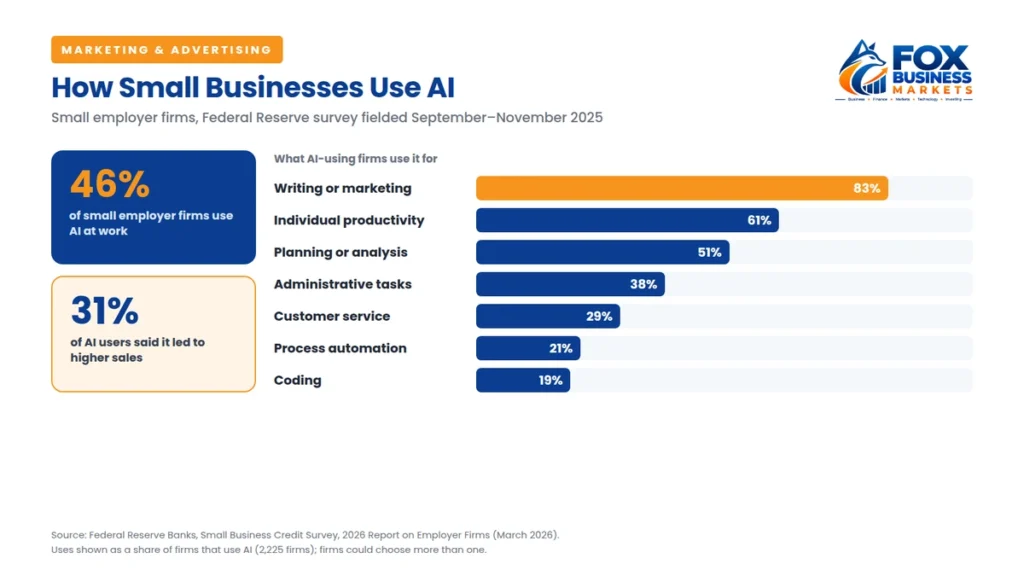
Use it for first drafts, post ideas, and email subject lines. Then edit until it sounds like you. Customers can tell when every post sounds like it came from the same machine, and generic content rarely earns a second look. Never use AI to write fake reviews or testimonials; that’s exactly what the FTC rule bans.
A Simple 90-Day Plan
If you’re starting digital marketing for small business from scratch, here’s a simple timeline:
Days | Focus | What to do |
| 1–30 | Foundations | Complete your Google Business Profile, fix your website basics, and ask your last 20 customers for reviews |
| 31–60 | Consistency | Start a monthly email, pick one social platform, and post twice a week |
| 61–90 | Testing | Run a small, fixed-budget ad campaign on one platform, track every lead, and keep only what works |
Common Mistakes
The biggest one is the plumber’s mistake: paying for ads before the free basics are working. Close behind are trying to be on every platform at once, never tracking where customers come from, and quitting a channel after a few weeks. Digital marketing for small business rewards consistency far more than cleverness.
For more ways to grow once your marketing is working, see our guide to business growth strategies, and add your plan to the marketing section of your business plan.
Frequently Asked Questions
What is the best digital marketing for small business?
For most local businesses, the best starting point is a complete Google Business Profile, a simple website, and a steady flow of real customer reviews. These are free or low-cost and help customers find you when they’re ready to buy.
How much does digital marketing for small business cost?
There’s no single right amount. Start with the free foundations, then set a small monthly test budget for ads that you can afford to lose. Increase spending only on the channels that bring in paying customers.
Is Google Business Profile free?
Yes. Google says creating a Business Profile and listing your business on Google is free. You’ll need to verify that you own the business.
Is social media marketing worth it for a small business?
It can be, if you choose one or two platforms where your customers spend time and post consistently. Visual businesses usually benefit most. Urgent services often get better results from Google search.
What are the rules for email marketing?
Under the CAN-SPAM Act, your emails must not use misleading headers or subject lines, must include your physical address and a working opt-out, and you must honor opt-outs promptly. Violations can cost up to $53,088 per email.
Can I use AI for small business marketing?
Yes, many small businesses already do. Use it for drafts and ideas, then edit so it sounds like your business. Don’t use it to create fake reviews, which the FTC has banned.
The Bottom Line
The best digital marketing for small business isn’t the most expensive or the most complicated. It’s the one built in the right order: a profile customers can find, a website that answers their questions, reviews that earn their trust, and then ads that amplify what already works. Get the free parts right, and every dollar you spend after that goes further.