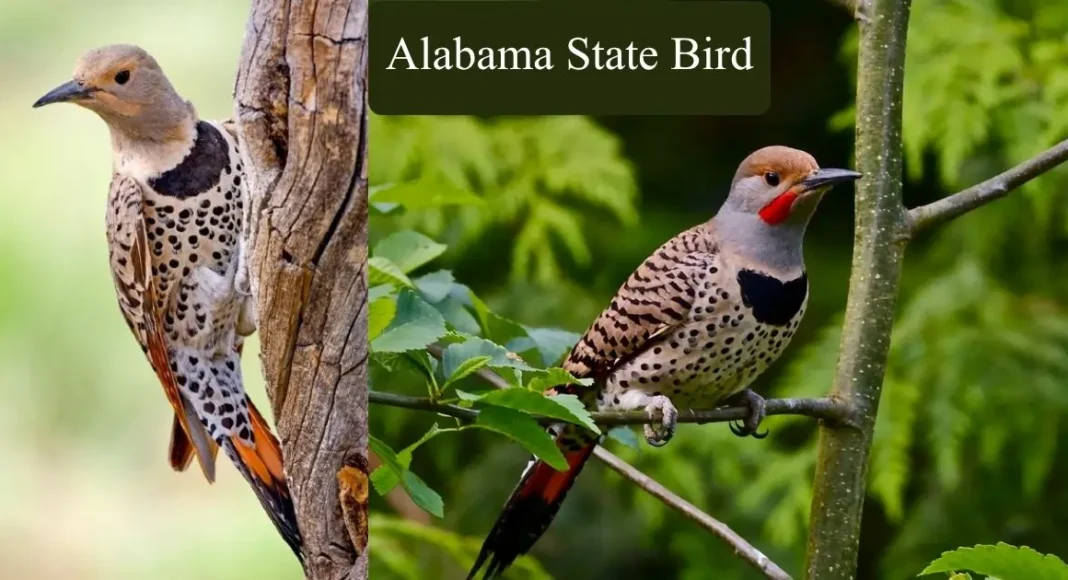
Every U.S. state has a bird that symbolizes its natural beauty, history, and cultural spirit. For Alabama, that honor belongs to the Yellowhammer, also known as the Northern Flicker (Colaptes auratus). This bright, lively bird has a story as colorful as its feathers, one that reflects Alabama’s resilience, heritage, and pride.
In this article, we’ll explore everything about the Alabama state bird, including its origins, behavior, symbolism, and how it became an official emblem in 1927.
Quick Facts About the Alabama State Bird – The Yellowhammer
- Scientific name: Colaptes auratus (Northern Flicker)
- Common name: Yellowhammer
- Family: Woodpecker family (Picidae)
- Habitat: Forest edges, open woodlands, and meadows
- Diet: Ants, beetles, fruits, and seeds
- Wingspan: About 17 inches
- Distinct feature: Bright yellow underwings and tail feathers
- State adoption: Officially adopted as Alabama’s state bird by the state legislature in 1927.
The Story Behind Alabama’s State Bird
The Yellowhammer didn’t just appear in Alabama’s history by chance — its roots trace back to the Civil War era. Alabama soldiers, dressed in gray uniforms trimmed with yellow, earned the nickname “Yellowhammers.” The term stuck, and soon became a proud symbol of Alabama’s identity.
When the state sought to choose an official bird, the Yellowhammer was an obvious and beloved choice. Its adoption in 1927 made it a permanent part of Alabama’s natural and cultural legacy.
Physical Description and Characteristics
The Northern Flicker is one of the few woodpecker species that prefers to forage on the ground rather than in trees. Its stunning golden-yellow underwings and tail make it easy to recognize in flight.
- Coloration: Brownish plumage with black bars on the back and wings
- Markings: A black crescent on the chest and a red patch on the nape of males
- Size: About 12 inches long
- Behavior: Known for its rhythmic drumming and loud, clear “wicka-wicka” call
The Yellowhammer’s beautiful combination of earthy tones and bright yellow highlights gives it both elegance and uniqueness among American birds.
Habitat and Distribution
Yellowhammers are widespread across Alabama, thriving in areas where forests meet open fields. They prefer habitats that offer both trees for nesting and open ground for feeding.
Common places you can spot them:
- Woodland edges and rural farmlands
- Golf courses and suburban parks
- Along fence lines or utility poles
They’re year-round residents in Alabama but migrate slightly north or south depending on seasonal food availability.
Diet and Feeding Habits
Unlike most woodpeckers, the Yellowhammer spends much of its time feeding on the ground. Its long, curved beak and sticky tongue make it a skilled hunter of ants — its favorite food.
Primary diet includes:
- Ants and beetles (main food source)
- Caterpillars, termites, and flies
- Wild berries and seeds in the winter months
You’ll often see Yellowhammers flicking leaves aside or probing the soil for insects, showcasing their adaptability and intelligence.
Behavior and Vocalization
Yellowhammers are social birds known for their lively communication. Their calls are a distinctive “wick-a-wick-a” sound, often heard echoing through woodlands.
They also exhibit fascinating drumming behavior, tapping on hollow trees or metal surfaces to mark territory or attract a mate. During spring, you might hear this rhythmic drumming early in the morning — a natural symphony marking Alabama’s awakening forests.
Symbolism and Cultural Significance
For Alabamians, the Yellowhammer represents resilience, pride, and Southern spirit. It’s more than a bird — it’s a reflection of the state’s identity.
Historically, when Alabama troops earned the “Yellowhammer” nickname during the Civil War, it symbolized courage and distinction. Today, that legacy continues — from sports teams to local organizations, “Yellowhammer” remains a name that stirs state pride.
Conservation and Importance in the Ecosystem
Although the Northern Flicker is not endangered, habitat loss and urbanization pose some challenges. Maintaining healthy woodland areas and reducing pesticide use are vital for its survival.
These birds play an important ecological role by:
- Controlling insect populations
- Creating nesting holes that other species later use
- Aiding in seed dispersal
Supporting Yellowhammer populations also supports Alabama’s overall ecosystem health.
Interesting Facts About the Yellowhammer
- The Yellowhammer is Alabama’s only official state bird.
- Male flickers can be recognized by a red or black “moustache” mark.
- Their drumming can reach up to 25 beats per second!
- Despite being a woodpecker, they spend more time on the ground than in trees.
- The nickname “Yellowhammer” later became a term of endearment for all Alabamians.
How the Yellowhammer Became Alabama’s Official Bird (1927)
In 1927, Alabama’s legislature made history by officially naming the Yellowhammer (Colaptes auratus) as the state bird. The choice wasn’t just about beauty — it was about heritage.
The Yellowhammer’s Civil War connection and deep presence across Alabama made it the perfect emblem of state identity. Since then, it has appeared in state symbols, songs, and even the “Yellowhammer News” media outlet — continuing to embody Alabama’s independent spirit.
How to Identify a Yellowhammer in the Wild
If you’re in Alabama and want to spot one, look for these signs:
- Habitat: Open areas with scattered trees
- Behavior: Hops on the ground searching for ants
- Sound: Listen for their signature “wicka-wicka” call
- Flight pattern: Undulating flight with bright yellow flashes
Binoculars and patience will reward you — once you see one, you’ll never forget that golden gleam.
Frequently Asked Questions (FAQ)
- What is the Alabama state bird?
The Alabama state bird is the Yellowhammer, also known as the Northern Flicker (Colaptes auratus). - When was the Yellowhammer officially adopted as Alabama’s state bird?
It was officially adopted by the Alabama state legislature in 1927. - Why is it called the Yellowhammer?
The name comes from the bird’s bright yellow wing and tail feathers, which resemble the striking yellow accents once worn by Alabama soldiers during the Civil War. - Where can I see the Yellowhammer in Alabama?
You can find them in woodlands, parks, farms, and suburban areas throughout the state — especially where trees meet open land. - Is the Yellowhammer endangered?
No, it’s not endangered, though habitat loss can impact its numbers locally. Conservation of forests and reduction in pesticide use help maintain its population.
Conclusion
The Yellowhammer is much more than Alabama’s state bird — it’s a living link to history, culture, and the natural world. From its Civil War symbolism to its bright yellow feathers flashing across open meadows, this remarkable woodpecker perfectly embodies Alabama’s warmth, resilience, and pride.
When you next hear its cheerful “wicka-wicka” call, remember — you’re listening to the spirit of Alabama itself.
Also Read:
- Taytros Festus MO Menu | Hours, 5 Best Dishes & Events Guide 2025
- The Social and Emotional Perks of Holiday Events for Seniors
- Eventbrite | Discover Events & Sell Tickets Effortlessly
- Soergel Orchards Fall Festival 2025: Events, Apple Picking & Family Fun
- Thanksgiving 2025 USA: Guide to Date, Best Quotes & More