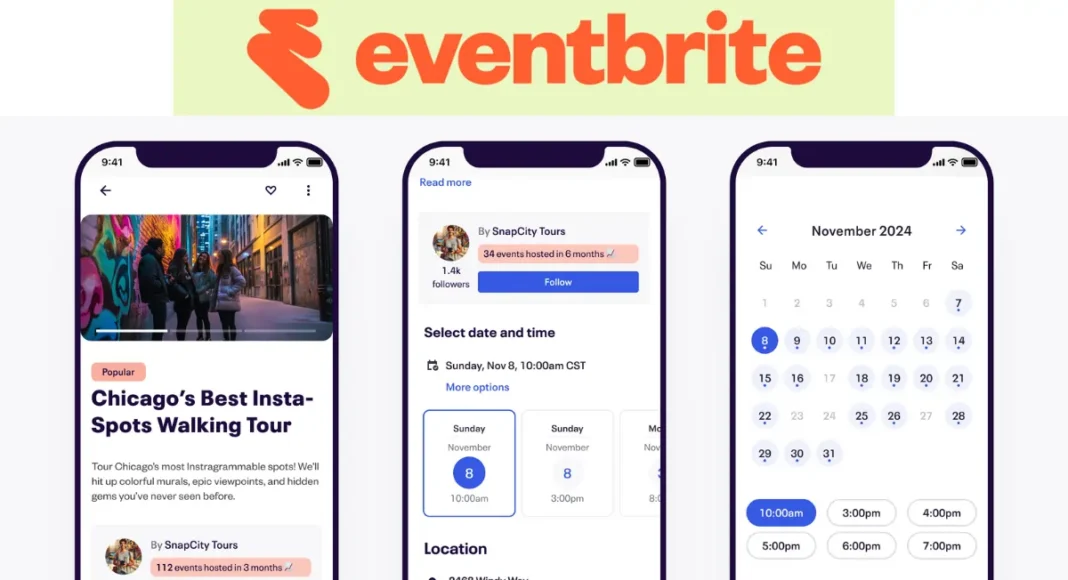
Quick answer: Eventbrite is a self-service ticketing and event discovery platform. Anyone can find local events or create and sell tickets for their own. Free events are free to list. For paid events in the U.S., Eventbrite charges organizers 3.7% + $1.79 per ticket plus 2.9% payment processing per order, which organizers can absorb or pass on to buyers. In March 2026, Eventbrite was acquired by Italian tech company Bending Spoons for about $500 million and became a private company.
Eventbrite at a Glance
| Detail | Information |
|---|---|
| Founded | 2006, San Francisco |
| Founders | Kevin Hartz, Julia Hartz and Renaud Visage |
| Went public | September 2018, NYSE (ticker EB) |
| Owner | Bending Spoons (acquisition completed March 10, 2026; ~$500M, $4.50 per share) |
| Status | Private; delisted from the NYSE |
| Revenue (2023) | ~$326 million |
| U.S. organizer fees | 3.7% + $1.79 per paid ticket, plus 2.9% processing per order |
| Free events | No fee |
| Apps | iOS and Android, for attendees and organizers |
Sources: Wikipedia, TicketNews, TickPick
A Short History
Eventbrite started in San Francisco in 2006 and became a game-changer for small and mid-size event organizers by letting anyone sell tickets online without a contract. Key moments:
- 2016: co-founder Julia Hartz became CEO.
- 2017: bought Ticketfly from Pandora for about $200 million to grow its live music business.
- 2018: went public on the New York Stock Exchange.
- 2020: laid off about 45% of staff as the pandemic shut down in-person events.
- 2023: began charging for larger free events, a change it later reversed; free events are now free to list again.
- 2026: acquired by Bending Spoons, the Milan-based owner of apps such as Evernote and Vimeo. The deal closed on March 10, 2026, and Eventbrite left the stock market.
What’s Changed Since the Bending Spoons Deal?
After the acquisition, Bending Spoons cut a significant part of Eventbrite’s U.S. staff and announced product updates, including:
- Faster event creation
- Redesigned creator profile pages
- Improved confirmation emails
- Check-in windows and multi-slot scanning for organizers
- Offline ticket access (announced as coming soon)
The older Flex plan was retired, but the core per-ticket fees stayed the same (Global Banking & Finance).
For Attendees: Finding and Using Tickets
- Search by city, date, category (music, business, food, classes and more) or online events.
- Check the event page for the organizer’s name, venue, refund policy and total price including fees.
- Check out with a credit or debit card, or with PayPal, Apple Pay or Google Pay where available.
- Access your tickets in the Eventbrite app or by email, then show the QR code at the door. Sign in to see all your ticket options.
Refunds: each organizer sets its own refund policy, so check it before you buy. Contact the organizer first. If the event is canceled, you’re generally entitled to a refund.
For Organizers: Creating an Event
Setting up an event takes a few steps (official overview: Eventbrite creates event):
- Create a free account.
- Add event details: title, date, time, venue or online link, description and images.
- Set up tickets: free, paid or donation; early-bird pricing; promo codes; capacity limits.
- Choose who pays fees: absorb them or pass them on to buyers.
- Publish and promote through Eventbrite’s discovery feed, email tools, social sharing and paid ads.
- Check in guests with the organizer app.
- Get paid: payouts go to your bank account according to Eventbrite’s payout schedule.
Eventbrite Fees (U.S., 2026)
| Item | Cost |
|---|---|
| Free events | $0 |
| Service fee (paid tickets) | 3.7% + $1.79 per ticket |
| Payment processing | 2.9% per order |
| Optional Pro subscription | About $15–$100 a month (more email marketing and advanced tools) |
Example: on a $40 ticket, total fees come to about $4.43, roughly 11% of the price. On cheaper tickets, the fixed $1.79 makes up a bigger share; on a $20 ticket, fees are about 15%.
Fees vary by country. Always confirm on the official Eventbrite pricing page.
Pros and Cons
Pros
- Free to list free events
- No setup costs or contracts
- Large built-in audience through Eventbrite’s discovery feed
- Easy event pages, mobile tickets and check-in app
Cons
- The fixed $1.79 fee is expensive for low-priced tickets
- Customer service is often criticized in reviews
- Refunds depend on each organizer
- Platform direction may keep changing under new ownership
Eventbrite Alternatives
| Platform | Best for |
|---|---|
| Ticketmaster | Large concerts, sports and venue-contracted events |
| Meetup | Recurring community groups and networking |
| Eventzilla | Lower-cost registration for conferences and classes |
| Luma, Tito, Humanitix | Tech meetups, conferences and fee-conscious organizers |
Tips
For attendees
- Look at the total price at checkout, not just the ticket price.
- Read the refund policy before buying.
- Only buy through eventbrite.com or the official app. Be wary of resale offers on social media.
For organizers
- Price tickets with fees in mind, especially under $25.
- Use early-bird pricing and promo codes to build momentum.
- Add strong images and a clear description; this helps your event show up in Eventbrite search.
FAQs
Is Eventbrite free? It’s free for attendees to browse and free for organizers to list free events. Paid events carry per-ticket fees.
How much does Eventbrite charge? In the U.S., 3.7% + $1.79 per paid ticket plus 2.9% payment processing per order.
Who owns Eventbrite? Bending Spoons, which completed its roughly $500 million acquisition on March 10, 2026.
Is Eventbrite still a public company? No. It was delisted from the NYSE when the acquisition closed.
Can I get a refund on Eventbrite? Refunds depend on the organizer’s policy. Contact the organizer first.
Is there an Eventbrite app? Yes, for iOS and Android, with separate tools for attendees and organizers.
Also read these articles:
- Super Bowl Halftime Performance info and curiosities
- CineLux Morgan Hill: Ticket Prices, Deals and Visitor Guide
- Custom Ink LLC | Custom T-Shirts & Promo Products
This article is not affiliated with Eventbrite. Fees and company details were checked on October 3, 2026, and can change.