Some of the most valuable companies in America were once days or weeks from collapse. Apple was, in Steve Jobs’s words, “90 days from going bankrupt” in 1997. Tesla closed a funding round on Christmas Eve 2008, three days before it would have run out of money. FedEx stayed in business after its founder won $27,000 playing blackjack in Las Vegas. These companies that almost went bankrupt didn’t recover by luck alone. Each one made a hard, specific decision at its lowest point, and that decision changed what came next.
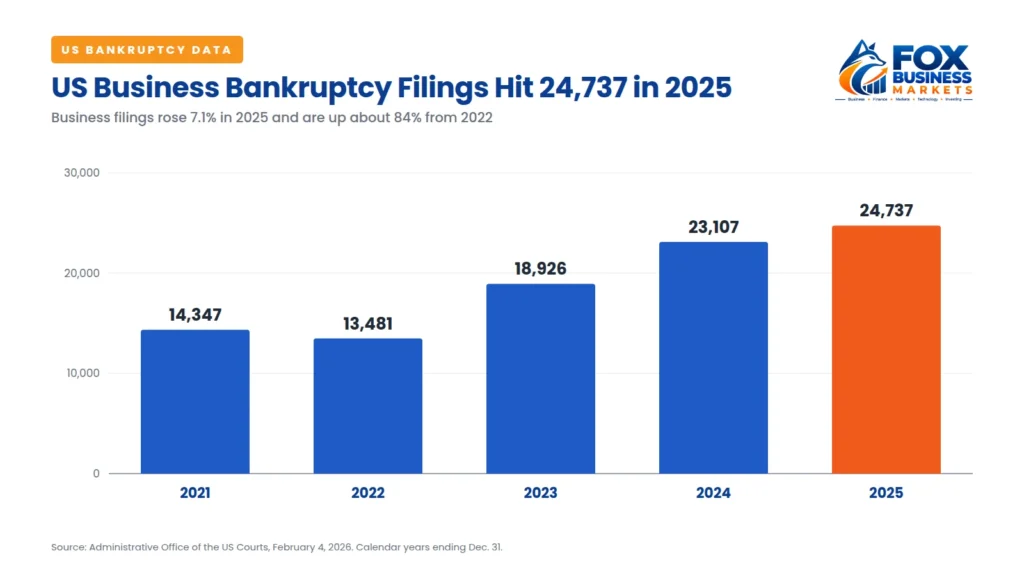
Most companies in trouble don’t get a second act. US business bankruptcy filings rose 7.1% in 2025, to 24,737, according to the federal courts (US Courts). Among larger companies, S&P Global Market Intelligence counted 785 bankruptcies in 2025, the highest total since 2010 (MonitorDaily). The eight companies that almost went bankrupt below are the rare ones that came back.
Companies That Almost Went Bankrupt: Key Facts
- Apple, 1997: Lost $1 billion in its fiscal year, then accepted a $150 million investment from rival Microsoft. In October 2025, it passed $4 trillion in market value.
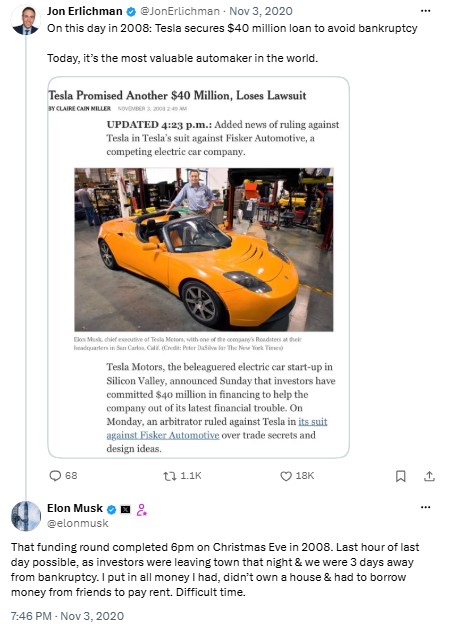
- Tesla, 2008: Elon Musk said the company was “3 days away from bankruptcy” when a funding round closed on Christmas Eve 2008.
- Marvel, 1996: Actually filed for Chapter 11. Thirteen years later, Disney bought it for about $4 billion.
- LEGO, 2003: Lost about $300 million in a single year. In 2025, it reported record revenue of DKK 83.5 billion.
- Ford, 2006: Pledged nearly all its US assets, reportedly including its Blue Oval logo, to borrow $23.5 billion, and avoided the 2009 government bailout.
- AMD, 2015: Its stock fell below $2. In September 2026, it crossed $1 trillion in market value.
8 Companies That Almost Went Bankrupt at a Glance
Here’s how close each company came, and what turned it around.
| Company | Crisis year | How close it came | The turning point | Where it is now |
| FedEx | 1973 | $5,000 left in the bank | A $27,000 blackjack win, then new funding | $94.7 billion revenue (FY2026) |
| Marvel | 1996 | Filed for Chapter 11 | Using film rights to make its own movies | Bought by Disney for about $4 billion |
| Apple | 1997 | “90 days from going bankrupt” | Steve Jobs’s return and Microsoft’s $150 million | Passed $4 trillion in 2025 |
| LEGO | 2003 | Lost about $300 million in a year | Cutting complexity and selling its theme parks | Record DKK 83.5 billion revenue in 2025 |
| Ford | 2006 | Lost $12.7 billion in a year | Borrowing $23.5 billion before the crisis | Avoided bankruptcy and a bailout |
| Starbucks | 2008 | Stock fell 42% in 2007 | Howard Schultz’s return and 600 store closures | $37.2 billion revenue (FY2025) |
| Tesla | 2008 | “3 days away from bankruptcy” | A Christmas Eve funding round | Peaked at $1.63 trillion in 2025 |
| AMD | 2014 | Stock fell below $2 | Lisa Su’s focus on new chip designs | Passed $1 trillion in 2026 |
The 8 Comeback Stories in Detail
1. FedEx: Saved at the Blackjack Table
How it started: Fred Smith launched Federal Express in 1973 with an idea many considered too expensive to work: a private overnight delivery network built around its own planes.

The turning point: Smith took that $5,000 to Las Vegas and won $27,000 playing blackjack, enough to cover a $24,000 fuel bill and keep the planes flying (FreightWaves). The story was first recorded by Roger Frock, FedEx’s early chief operating officer, and Smith later told it himself. Employees agreed to hold off cashing their paychecks, and FedEx later secured $24.5 million in new funding and a $27.5 million loan (Priceonomics). It turned its first profit, $3.6 million, at the end of 1976.
Where it is now: FedEx reported $94.7 billion in revenue for fiscal 2026 (FedEx). Smith died in June 2025, at age 80.
Myth vs. fact: Blackjack didn’t save FedEx on its own. It bought time. The real rescue came from patient employees and millions in new funding.
The lesson: When a company is almost out of cash, buying time can matter as much as the long-term plan.
2. Marvel: Bankrupt, Then Worth $4 Billion
How it started: By the mid-1990s, Marvel owned some of the most famous characters in the world, including Spider-Man, the X-Men, and Iron Man.
The low point: Among these companies that almost went bankrupt, Marvel is the only one that actually did. In December 1996, Marvel Entertainment Group filed for Chapter 11 protection and cut 115 jobs, about a third of its workforce (The Washington Post). It emerged in October 1998 after merging with Toy Biz.
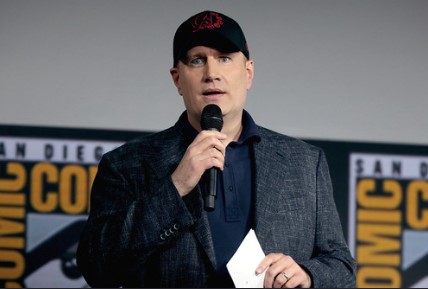
The turning point: For years, Marvel licensed its best characters to other studios, including Spider-Man to Sony and the X-Men to Fox. Then it took a far bigger risk. Marvel borrowed $525 million from Merrill Lynch to make its own films, using the movie rights to its characters as collateral. “The assets were on the line,” Marvel Studios chief Kevin Feige later said. “It was make-or-break” (Variety). Its first self-produced film, Iron Man, opened in May 2008.
Where it is now: In 2009, Disney agreed to buy Marvel for about $4 billion (SEC). By July 2024, Marvel Studios films had earned more than $30 billion worldwide, making it the highest-grossing film franchise of all time (Disney).
The lesson: Marvel’s comeback came from finally using its most valuable assets itself instead of licensing them out.
3. Apple: 90 Days From Going Bankrupt
How it started: By the mid-1990s, Apple’s sales were falling and it had gone through several CEOs.
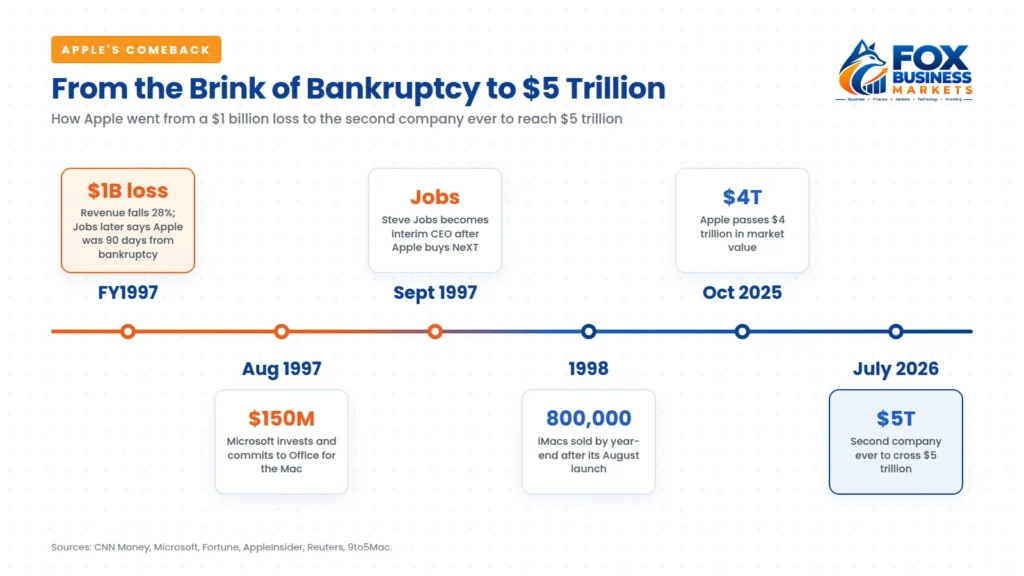
The low point: In fiscal 1997, Apple lost $1 billion as revenue fell 28% to $7.1 billion (CNN Money). That October, Dell founder Michael Dell was asked what he would do with Apple. His answer: “I’d shut it down and give the money back to the shareholders” (Fortune). Steve Jobs later said: “We were 90 days from going bankrupt” (The Next Web).
The turning point: Apple bought NeXT, the company Jobs had founded, which brought him back. He became interim CEO in September 1997. A month earlier, Microsoft had agreed to invest $150 million in Apple and keep making Microsoft Office for the Mac (Microsoft). The colorful iMac went on sale in August 1998 and sold about 800,000 units by the end of that year (AppleInsider).
Where it is now: On October 28, 2025, Apple passed $4 trillion in market value for the first time, the third company to do so (Reuters via Yahoo Finance).
Myth vs. fact: The “90 days” line is Jobs’s own recollection from 2010, not a figure from Apple’s 1997 financial reports.
The lesson: A rival’s money and a smaller, sharper product line saved Apple, not one magic product.
You can read how Apple was founded in our collection of entrepreneur success stories.
4. LEGO: Too Many Products, Not Enough Profit
How it started: LEGO, the Danish family-owned toymaker, spent the late 1990s and early 2000s expanding far beyond its bricks, including into Legoland theme parks.
The low point: In 2003, sales fell 26% and LEGO posted a net loss of DKK 1.07 billion (LEGO). According to Wharton, the company “was virtually out of cash.” It lost about $300 million that year and expected to lose up to $400 million the next (Wharton). Its 2004 annual report warned that LEGO had to change how it did business “if it is to survive as an independent, Danish family-owned group.”
The turning point: Jørgen Vig Knudstorp became CEO in October 2004. He later said the company “did too many things at the same time. It lost its focus and its core” (BCG). LEGO cut its range of about 100 colors in half and reduced its suppliers by 80% (strategy+business). In 2005, it sold a controlling stake in its Legoland theme parks to Blackstone (Blackstone).
Where it is now: In 2025, LEGO’s revenue rose 12% to a record DKK 83.5 billion, and net profit reached DKK 16.7 billion (LEGO). Fortune has called it “the world’s largest toymaker” (Fortune).
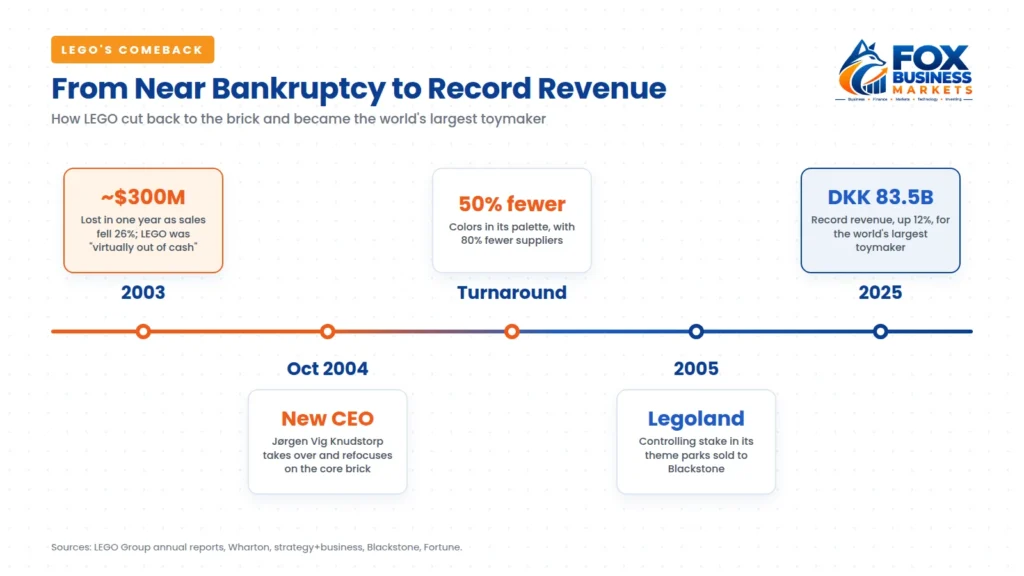
The lesson: Growth in too many directions can hide a weak core. LEGO recovered by going back to the brick.
5. Ford: Borrowing Before the Storm
How it started: By the mid-2000s, Ford’s losses were growing.
The low point: In 2006, Ford posted a net loss of $12.7 billion, or $6.79 a share (SEC).
The turning point: In September 2006, Ford hired Alan Mulally from Boeing as CEO. That December, Ford raised $23.5 billion in new funding, secured by almost all of its US assets. Reports said the collateral even included the Blue Oval logo (CNN Money). When the 2008 financial crisis hit, Ford had cash that its rivals didn’t. Mulally told the US Senate in December 2008 that Ford did “not require access to a government bridge loan” (US Senate).

Where it is now: General Motors and Chrysler went through bankruptcy and federal bailouts in 2009. Ford did neither, and earned $2.7 billion that year, its first full-year profit since 2005 (SEC). The road since hasn’t been smooth. In 2025, Ford reported record revenue of $187.3 billion but a net loss of $8.2 billion (Ford). In July 2026, it raised its full-year 2026 adjusted EBIT forecast to $10 billion to $11 billion (SEC).
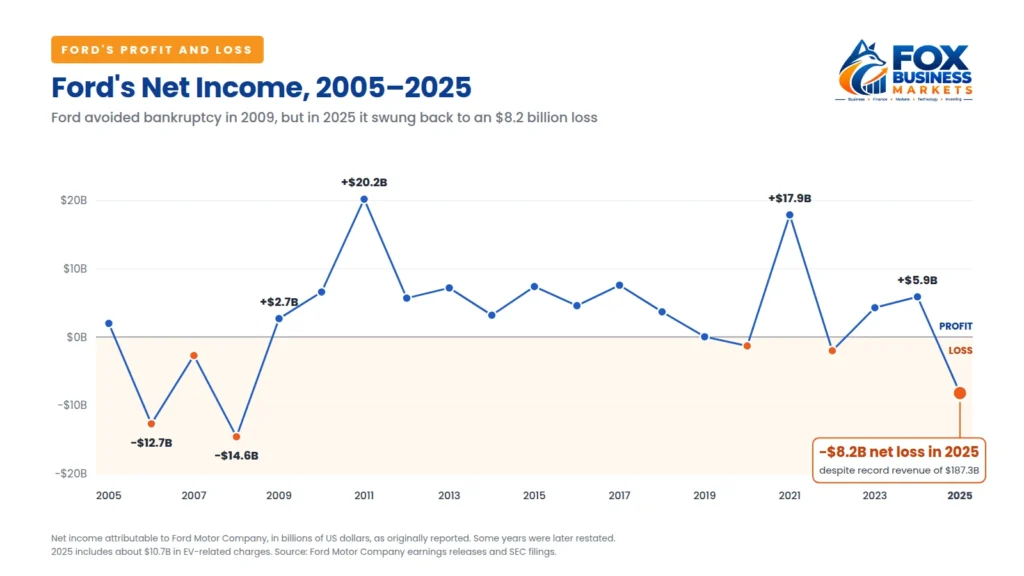
The lesson: The best time to raise money is before you desperately need it.
6. Starbucks: Closing Stores to Save the Brand
How it started: Starbucks expanded rapidly through the 2000s, opening thousands of stores in the US alone.
The low point: The company’s stock fell 42% in 2007 (CNN Money). Starbucks wasn’t near bankruptcy, but it was losing what made it special.
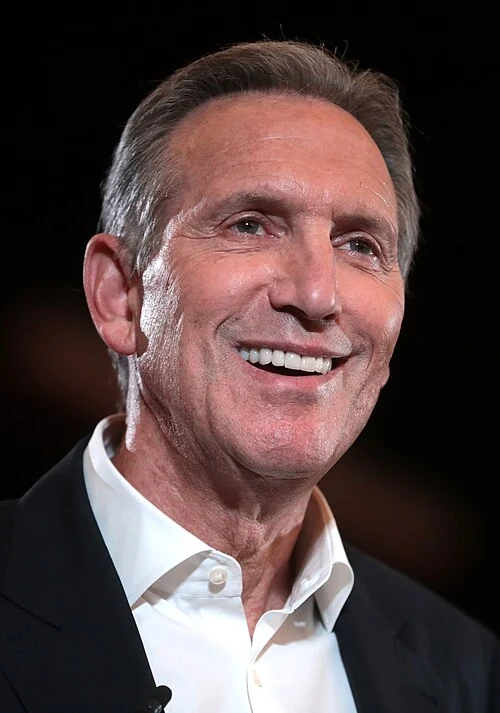
The turning point: Howard Schultz returned as CEO on January 7, 2008 (SEC). On February 26, 2008, Starbucks closed all 7,100 of its company-owned US stores for about three hours to retrain baristas (NBC News). That summer, it announced it would close about 600 underperforming US stores (SEC).
Where it is now: The stock rose 143% in 2009. In fiscal 2025, Starbucks reported $37.2 billion in revenue and 40,990 stores worldwide (SEC). Its most recent results, for the quarter ended June 28, 2026, showed global comparable store sales up 7.9%, led by more customer transactions, and 41,304 stores worldwide. Starbucks also raised its fiscal 2026 outlook (SEC).
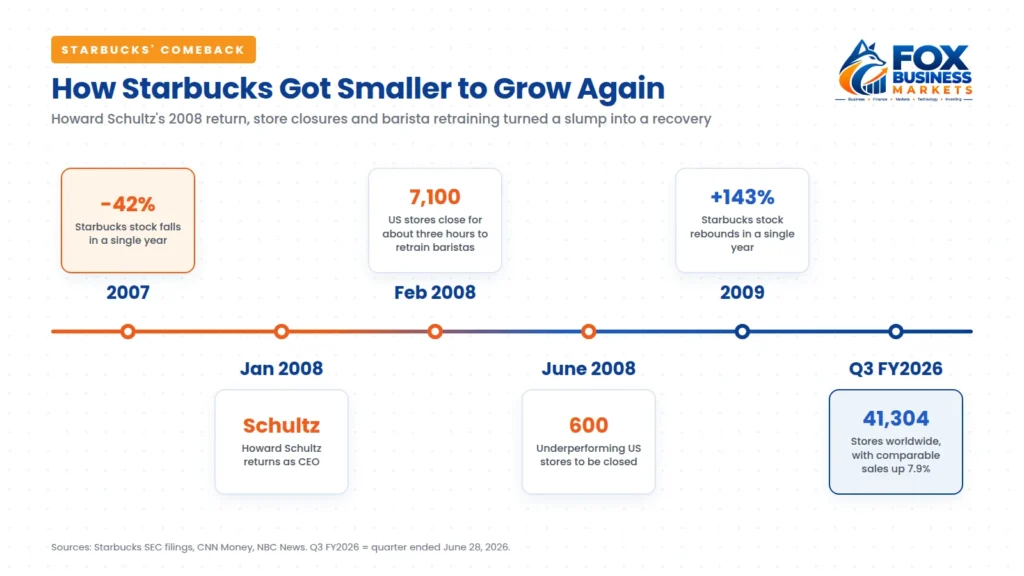
Myth vs. fact: The famous store closing is often described as lasting 3.5 hours. News reports at the time said about three.
The lesson: Sometimes a comeback starts with getting smaller.
7. Tesla: Three Days From Bankruptcy, Twice Near the Edge
How it started: In 2008, Tesla was a small startup selling its first electric car, the Roadster.
The low point: As the financial crisis hit, Tesla ran short of money. Elon Musk later wrote that the company’s last funding round “completed 6pm on Christmas Eve in 2008. Last hour of last day possible… we were 3 days away from bankruptcy” (X/@elonmusk).
The turning point: In January 2010, the US Department of Energy approved a $465 million loan, which Tesla repaid in full in May 2013 (US Department of Energy). In June 2010, Tesla went public at $17 a share, the first US carmaker to go public since Ford in 1956 (CNN Money).
The second crisis: Tesla came close again during Model 3 production. Asked in 2018 how close it came to dying, Musk said: “Within single digit weeks” (Forbes).
Where it is now: On December 16, 2025, Tesla’s stock closed at a record $489.88, valuing the company at about $1.63 trillion (UPI).
The lesson: Surviving one crisis doesn’t make a company safe from the next.
8. AMD: From Under $2 a Share to $1 Trillion
How it started: For decades, AMD was the smaller rival to Intel in computer chips.
The low point: When Lisa Su became CEO in October 2014, AMD’s stock traded at about $3.28 (24/7 Wall St.). In 2015, revenue fell 28%, AMD posted a $660 million loss, and it carried $2.26 billion in debt (SEC). In January 2016, its stock fell to $1.83 in after-hours trading (The Register).
The turning point: Su bet the company on a new chip design called Zen. The first Ryzen processors built on it launched in March 2017 (AMD).
Where it is now: In February 2022, AMD’s market value passed Intel’s for the first time (Tom’s Hardware). On September 21, 2026, AMD crossed $1 trillion (Yahoo Finance).
The lesson: A turnaround can take years. AMD’s first Zen chips arrived about two and a half years after Su took over.
What Did These Companies That Almost Went Bankrupt Do Differently?
| Turnaround move | Who did it | Why it worked |
| Raised money early | Ford, Tesla | Cash bought time when credit markets froze |
| Cut back to the core | LEGO, Apple, Starbucks | Fewer products made each one stronger |
| Brought in a new or returning leader | Apple, Ford, Starbucks, LEGO, AMD | A fresh decision-maker could make unpopular cuts |
| Used its most valuable asset differently | Marvel | Its characters became films instead of licenses |
| Took a calculated risk | Marvel, AMD | A single big bet changed the company’s direction |
Comeback Myths vs. Facts
Famous stories of companies that almost went bankrupt often get simplified in the retelling.
| Popular version | What the record shows |
| “A gambling win saved FedEx.” | It covered one fuel bill. New funding and loans saved the company. |
| “Microsoft saved Apple.” | The $150 million helped, but Jobs’s product cuts and the iMac did the work. |
| “Marvel almost went bankrupt.” | It actually filed for Chapter 11 in 1996. |
| “Starbucks closed for 3.5 hours.” | Reports at the time said about three hours. |
| “Tesla almost failed once.” | It came close twice, in 2008 and during Model 3 production. |
Loss figures in these stories come from earnings releases and SEC filings. If you want to check numbers like these yourself, see our guide on how to read an earnings report.
What These Comeback Stories Can and Cannot Tell You
They can show what companies that almost went bankrupt did at their lowest point, from raising cash early to cutting product lines, and how long recovery actually took.
They cannot show:
- How often comebacks happen. For every Ford, there are companies like Lehman Brothers, Sears, and Blockbuster that didn’t recover. This is survivorship bias.
- That the same move will work again. Ford’s 2006 loan worked because the 2008 crisis came later. Borrowing heavily can also sink a company.
- The role of timing and luck. FedEx’s blackjack win and Tesla’s last-hour funding round depended on things no plan could control.
Read these stories of companies that almost went bankrupt as evidence that a crisis can be survived, not as a guarantee that it will be. For a wider look at how setbacks shaped famous startups, see these stories of founders who beat the odds.
Frequently Asked Questions
What are some famous companies that almost went bankrupt?
Apple, Tesla, FedEx, LEGO, Ford, and AMD all came close. Apple was “90 days from going bankrupt” in 1997, according to Steve Jobs. Tesla was three days away in 2008, according to Elon Musk. Marvel actually filed for bankruptcy in 1996 and later sold to Disney for about $4 billion.
How did Apple avoid bankruptcy in 1997?
Steve Jobs returned after Apple bought his company, NeXT. Microsoft invested $150 million and committed to making Office for the Mac. Jobs cut Apple’s product line, and the iMac, launched in August 1998, sold about 800,000 units by the end of that year.
Did FedEx really survive because of blackjack?
Partly. According to former FedEx COO Roger Frock and later accounts from Fred Smith, Smith turned the company’s last $5,000 into $27,000 in Las Vegas, enough to pay a fuel bill. That bought time, but new funding and a $27.5 million loan kept FedEx running.
Why did Ford not need a bailout in 2009?
In December 2006, Ford borrowed $23.5 billion, using almost all of its US assets as collateral. When the 2008 crisis hit, it had cash that General Motors and Chrysler didn’t, so Ford avoided both bankruptcy and a government bailout.
What is the difference between Chapter 11 and going out of business?
Chapter 11 bankruptcy lets a company keep operating while it restructures its debts under court supervision. Marvel filed for Chapter 11 in 1996 and emerged in 1998. A company that liquidates under Chapter 7 shuts down and sells its assets.
How long does a corporate turnaround take?
For these companies that almost went bankrupt, it usually took years. FedEx needed about three years to turn its first profit. AMD’s first Zen chips arrived about two and a half years after Lisa Su became CEO, and its stock took years more to recover.
Final Takeaway
These companies that almost went bankrupt share a pattern: each faced its lowest point with one clear, often unpopular decision. Ford borrowed before the storm, LEGO cut back to the brick, Starbucks closed stores, and Marvel bet its characters on its own films. Luck played a part, from a blackjack table to a Christmas Eve funding round. But the comeback came from the decisions made after the luck bought them time.