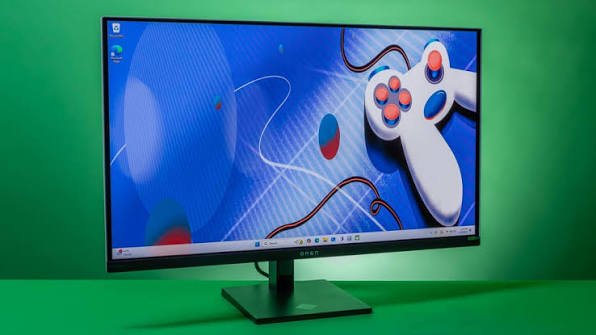
Best Gaming Monitors For Competitive Gaming is explained in this practical, step-by-step guide with clear recommendations, comparisons, and real gaming examples.
AEO Quick Answer
The best gaming monitor for competitive gaming combines a high
refresh rate, low measured input lag, fast and well-controlled pixel
response, a resolution your PC can drive at high FPS, and a size that
keeps the action easy to scan. For many esports players, 24- to 27-inch
1080p or 1440p high-refresh displays are practical choices; the right
refresh rate depends on the frame rates your PC can sustain.
This guide targets the search intent behind “best gaming monitors for
competitive gaming” with practical explanations, comparison points,
gaming scenarios, and buying or optimization advice that can be applied
without relying on hype.
Why the
Monitor Is Part of Competitive Performance
In competitive gaming, the monitor is not simply a window into the
PC. It determines how frequently new frames can be shown and how quickly
pixels transition. A fast computer connected to a slow display cannot
visually deliver its full frame-rate advantage. That is why esports
setups often prioritize refresh rate and response behavior over
cinematic resolution.
Intel’s gaming monitor guide highlights refresh rate, response time,
resolution, color and panel type as core buying factors. Competitive
players should add measured input lag and real-world overdrive behavior
to that list because advertised specifications do not always describe
the full experience.
Refresh Rate: 144
Hz, 240 Hz, 360 Hz and Beyond
Refresh rate is measured in hertz and tells you how many times the
display can refresh each second. Moving from 60 Hz to 120 or 144 Hz is
easy for many players to notice because motion becomes smoother and more
frequent visual updates can reduce the time to see new information.
Moving from 144 Hz to 240 Hz or higher can still improve motion
clarity and responsiveness, but the returns become smaller and the PC
must produce very high frame rates to take full advantage. Competitive
players in Valorant, Counter-Strike 2, Overwatch 2 and similar titles
are the audience most likely to value these faster panels.
Match Refresh Rate to Real
FPS
A 360 Hz monitor makes the most sense when your system can sustain
very high frame rates in the games you care about. If your PC usually
runs a demanding game around 100 to 140 FPS, a quality 144 or 165 Hz
display may be a better use of budget than an extreme-refresh panel.
Think in terms of the entire system. CPU performance often matters
heavily in esports at low graphics settings, while GPU performance
becomes more important as resolution and visual settings rise. Choose
the monitor after understanding what your PC can actually deliver.
Response Time:
Ignore the Marketing Shortcut
Response time describes how quickly pixels change. Lower response
times can reduce visible trails behind moving objects, but manufacturer
numbers are often best-case values. Intel notes that overdrive settings
influence response measurements and can introduce overshoot artifacts if
pushed too aggressively.
Independent testing is therefore useful. A monitor that claims 1 ms
but shows obvious inverse ghosting at its fastest mode may look worse
than a model with a more balanced response setting. Competitive clarity
is about clean transitions, not simply the smallest printed number.

In-Blog Image: Quick checklist for the main decision points in this
guide.
Input Lag: The Delay You Feel
Input lag is different from pixel response time. It refers to delay
before an action is represented on screen and can be affected by monitor
processing. Gaming modes often disable extra image processing to reduce
this delay.
Competitive players should use low-latency monitor modes and avoid
unnecessary processing features during matches. Total system latency
also includes the mouse, game engine, CPU, GPU and frame queue, so the
display is one link in a larger chain.
1080p vs 1440p for Esports
1080p remains popular in competitive environments because it is
easier for hardware to drive at extremely high FPS. A 24- or 25-inch
1080p display also keeps the full game area within a compact field of
view. For players chasing maximum frame rate, this combination is still
practical.
1440p provides sharper text and game detail and is increasingly
attractive at 27 inches. Modern GPUs can drive many esports titles at
high frame rates at this resolution. The trade-off is greater GPU
workload, so check benchmarks for your exact hardware and game.
Screen Size and Viewing
Distance
More screen is not always better for competition. A very large
monitor can require more eye or head movement to scan the interface.
Many esports players prefer approximately 24 to 27 inches because
important information stays within a manageable visual area at normal
desk distance.
For mixed use, 27-inch 1440p is a strong balance because it offers
more workspace for study and productivity while remaining suitable for
fast gaming. Your desk depth should also influence the choice.
Adaptive Sync and Tearing
Variable refresh technologies synchronize display behavior with
changing frame delivery to reduce tearing and stutter. This is valuable
when FPS moves across a range rather than staying fixed. Check the
monitor’s supported adaptive-sync range and compatibility with your
GPU.
Competitive players sometimes use settings that prioritize the lowest
possible latency over perfect tear-free presentation, while others
prefer adaptive sync for smoothness. Test the supported configuration
that best fits your game and frame-rate range.
Panel Technology and Motion
Clarity
Fast IPS panels are common because they combine good color and
viewing angles with high refresh rates. VA panels can provide stronger
contrast but may vary in dark-transition speed. OLED gaming monitors
offer extremely fast pixel transitions and excellent contrast, though
price, brightness behavior and long-term static-content considerations
may matter.
Do not buy by panel label alone. Two monitors using the same broad
technology can have different tuning, overdrive, input lag and
brightness. Model-specific testing remains important.
Competitive
Features That Are Actually Useful
A stable stand with height adjustment helps you position the display
consistently. A crosshair or black-equalizer feature may be useful in
some games, although tournament rules and personal preference matter. A
clear on-screen refresh indicator can help troubleshooting. Multiple
display inputs are useful if you connect a console or laptop.
RGB lighting on the back of the monitor has little direct competitive
value. Spend first on the panel’s motion performance, input lag, stand
and warranty.
Gaming Example:
Choosing a Monitor for Valorant
Suppose your PC sustains 250 to 350 FPS in Valorant at competitive
settings. A 240 Hz monitor is a logical match and a 360 Hz model may
offer additional responsiveness if budget allows. At this point,
measured response behavior and input lag become more important than a
jump to 4K resolution.
If the same PC is also used for university work and single-player
games, a 27-inch 1440p 240 Hz display can provide a sharper all-purpose
experience, provided the GPU can deliver the desired frame rates. The
‘best’ monitor changes when mixed use enters the decision.
A Practical Buying Checklist
First, set your target resolution. Second, identify the typical FPS
range of your main games. Third, choose a refresh tier that your PC can
use. Fourth, read independent measurements of response time, overshoot
and input lag. Fifth, check adaptive sync, ports, stand adjustment and
warranty.
Finally, make sure Windows is actually configured to use the high
refresh rate after installation. Many users upgrade the hardware and
forget this simple software step, leaving a fast display running at a
lower setting.
High Refresh Rate Math
in Simple Terms
At 60 Hz, a refresh interval is about 16.7 milliseconds. At 144 Hz it
is about 6.9 ms, at 240 Hz about 4.2 ms, and at 360 Hz about 2.8 ms.
These numbers do not equal total system latency, but they show why
faster refresh can present new visual information sooner.
The improvement between each tier becomes progressively smaller in
absolute milliseconds. That is why a 240 Hz or 360 Hz purchase makes the
most sense for players who already have a fast PC, refined settings and
a strong competitive focus.
Ports and Connection
Standards
Make sure the laptop or GPU output and the monitor input can support
the desired resolution and refresh rate together. DisplayPort and HDMI
capabilities vary by version and implementation. The cable also needs to
support the required bandwidth.
If a monitor advertises a very high refresh rate, check whether that
rate is available over all inputs or only a specific port. This is
especially important when switching between a gaming desktop, laptop and
console.
Quick Comparison Table
| Feature | Competitive priority | What to look for |
|---|---|---|
| Refresh rate | Very high | 144/165 Hz minimum for many players; 240 Hz+ for serious esports |
| Response behavior | Very high | Fast transitions with low overshoot |
| Input lag | Very high | Low measured processing delay |
| Resolution | High | 1080p for max FPS; 1440p for sharper mixed use |
| Adaptive sync | Medium-High | Useful VRR range and GPU compatibility |
| Stand | Medium | Height, tilt, stable base |
| HDR/RGB | Low for esports | Nice extras, not core competitive features |
Related Gaming Guides
Best Gaming Accessories for PC Gamers: Complete 2026 Setup Guide, How to Build a Gaming PC: Step-by-Step Beginner Guide for 2026, Best Gaming Laptops for Students: What to Buy for Study and Play in 2026, How to Improve Gaming Performance on PC: FPS, Latency and Stability Guide.
External Authority Links
Frequently Asked Questions
Is 144 Hz enough for
competitive gaming?
Yes for many players. Serious esports users with very high FPS may
benefit from 240 Hz, 360 Hz or faster displays.
Is 240 Hz better than 144 Hz?
It provides more frequent updates and can feel more responsive, but
the improvement is smaller than the jump from 60 Hz to 144 Hz and
requires high frame rates.
Should I buy 1080p or
1440p for esports?
Choose 1080p when maximum FPS and lower GPU load are priorities.
Choose 1440p for sharper visuals and mixed productivity if your GPU can
sustain the desired frame rate.
Does 1 ms response
time mean no input lag?
No. Pixel response time and input lag are different measurements.
Look for independent tests of both.
What monitor
size is best for competitive gaming?
Around 24 to 27 inches is common because it keeps the action easy to
scan at a desk, but personal viewing distance matters.
Final Takeaway
The best answer to best gaming monitors for competitive gaming
depends on matching hardware and settings to real gaming needs. Start
with your target games, budget and performance goal, prioritize the
parts or settings that remove the biggest limitation, and verify results
with real use. A balanced setup usually delivers a better experience
than chasing one impressive specification while ignoring comfort,
compatibility, thermals or display capability.