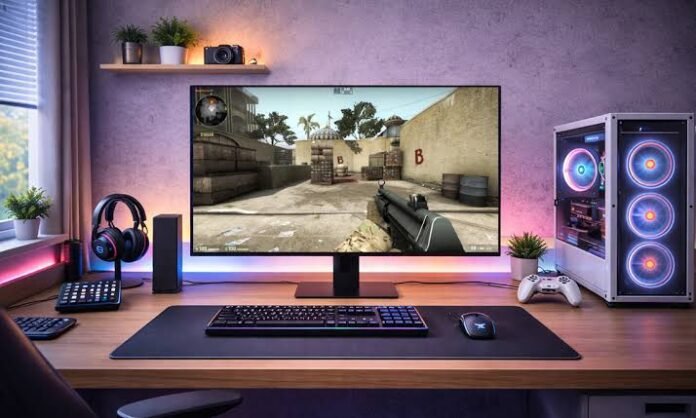
Best Gaming Laptops For Students is explained in this practical, step-by-step guide with clear recommendations, comparisons, and real gaming examples.
AEO Quick Answer
The best gaming laptop for a student balances performance with
portability, battery life, cooling and price. For most students, a 14-
to 16-inch laptop with a modern midrange CPU, dedicated GPU, 16 GB or
more of RAM, at least a 512 GB SSD, a 120 Hz or faster display, and
USB-C charging or strong connectivity offers the best mix of coursework
and gaming.
This guide targets the search intent behind “best gaming laptops for
students” with practical explanations, comparison points, gaming
scenarios, and buying or optimization advice that can be applied without
relying on hype.
Why
Students Need a Different Kind of Gaming Laptop
A desktop gaming PC can maximize performance per dollar, but students
often need one computer for lectures, libraries, assignments, travel and
gaming. That changes the buying criteria. A laptop that is excellent at
a desk may be frustrating if it weighs too much, has a huge charger,
lasts only a short time away from an outlet or becomes distractingly
loud during simple tasks.
The best student gaming laptop is therefore not necessarily the
fastest model. It is the machine you can carry regularly, use
comfortably for coursework and still enjoy after class. Performance
matters, but so do battery behavior, webcam quality, keyboard comfort,
ports and durability.
Start With Your Course
Requirements
Before comparing gaming specifications, check what your degree
actually requires. Business, humanities and general study can run on
modest hardware, while engineering, architecture, computer science, data
science, 3D design and video production may benefit from stronger CPUs
and GPUs. NVIDIA specifically positions RTX laptops for STEM workloads
such as engineering, modeling, data analytics, AI and rendering.
If your university provides a software list, use it as a minimum
compatibility guide. Some specialist applications favor Windows, certain
GPU APIs or particular amounts of RAM. Buying for the course first
prevents a gaming-focused decision from creating academic problems
later.
GPU: Choose the Right
Performance Class
The GPU has the largest effect on gaming frame rates in demanding
titles. Entry-level dedicated graphics can handle esports and lighter
games well at sensible settings. Midrange GPUs provide a stronger
balance for 1080p or 1600p gaming and are usually the sweet spot for
students who want to play modern releases without carrying a
desktop-replacement laptop.
Remember that laptop GPU names do not tell the whole story. Power
limits and cooling design can change performance between two laptops
using a similarly named GPU. Read model-specific reviews and benchmarks
rather than assuming every laptop with the same graphics label performs
identically.
CPU: Important for Both
Study and Gaming
A modern multicore processor helps with compilation, spreadsheets,
simulations, content creation and multitasking as well as gaming.
Competitive games that target very high frame rates can also become
CPU-sensitive. However, students rarely need the most expensive mobile
CPU simply to play games.
Balance is again the key. A midrange CPU paired with a capable GPU
often produces a better gaming experience than an extreme CPU paired
with weak graphics. For heavy engineering or creation workloads,
prioritize sustained performance and cooling, not just peak boost
numbers.

In-Blog Image: Quick checklist for the main decision points in this
guide.
RAM and Storage: Avoid
the Bare Minimum
Sixteen gigabytes of RAM is a sensible minimum target for a student
gaming laptop today. If you run virtual machines, large datasets, Adobe
applications, CAD tools or many browser tabs alongside games, 32 GB can
be a worthwhile upgrade. Check whether the memory is soldered or
upgradeable before buying.
Storage fills quickly when class files, recordings and large games
share the same drive. A 512 GB SSD can work with careful management, but
1 TB is more comfortable. An extra M.2 slot is valuable because it lets
you expand later instead of replacing the original drive.
Display: Gaming Speed
Meets Study Comfort
A 120 Hz, 144 Hz or faster panel makes desktop motion and games feel
smoother than a basic 60 Hz display. For competitive titles, high
refresh can be especially useful. Resolution should match GPU
capability; very high resolution looks sharp for text but increases
gaming workload.
Also check brightness, color coverage and aspect ratio. A 16:10
screen provides extra vertical space for documents and code. Students
who edit photos or video should care about color accuracy, while
competitive gamers may prioritize refresh rate and response
behavior.
Battery Life and Portability
Gaming laptops use powerful components, so gaming on battery is
generally not the ideal use case. The more important question is how
long the laptop lasts during notes, browsing, documents and video. Look
for reviews that test light-use battery life rather than relying only on
manufacturer claims.
Weight includes the charger. A laptop that seems acceptable at 2.2 kg
can feel much heavier when a large power brick, mouse, headphones and
textbooks join the bag. A compact model with efficient performance may
be the better student machine even if a larger laptop is faster in
benchmarks.
Cooling and Noise
Thin gaming laptops have to move substantial heat through limited
space. Under gaming loads, fan noise is normal, but the quality of the
cooling system affects sustained performance and comfort. A laptop that
overheats may reduce clock speeds, while an overly aggressive fan
profile can be distracting in a quiet room.
Use balanced or silent profiles for lectures and productivity, then
switch to performance mode when plugged in for gaming. Keep vents clear
and avoid gaming with the laptop buried in bedding or on a soft surface
that blocks airflow.
Keyboard, Webcam and Ports
Students type more than they may expect, so test keyboard layout and
feel. Check whether the arrow keys, function row and trackpad suit your
work. A decent webcam and microphone help with remote classes and group
projects. HDMI, USB-A, USB-C, audio and networking ports can reduce the
need for adapters.
USB-C power delivery is convenient for light use if the laptop
supports it, although full gaming performance may still require the main
charger. If you use an external monitor in a dorm, verify that the
display outputs connect to the appropriate GPU path.
Best Laptop Profiles by
Student Type
A budget-conscious student who mainly plays Valorant, League of
Legends, Rocket League and Minecraft can focus on a capable entry gaming
GPU, 16 GB RAM and a high-refresh 1080p-class screen. An engineering or
creative student may benefit from a stronger GPU, 32 GB RAM and 1 TB
storage because the same hardware accelerates coursework.
A student who travels daily should prioritize weight, battery life
and build quality. Someone living in a dorm and rarely carrying the
laptop can accept a heavier 16-inch model for stronger cooling and a
larger screen.
Gaming
Example: College Laptop for Fortnite and Coursework
Consider a student who uses Microsoft Office, dozens of browser tabs,
occasional Python projects and Fortnite in the evening. A modern
midrange processor, dedicated midrange GPU, 16 GB or 32 GB RAM, 1 TB SSD
and 144 Hz-class display provide a balanced target. The student gains
smooth esports gaming without paying for a top-tier GPU that also
increases cost, heat and charger size.
If the same student begins 3D rendering or machine-learning
coursework, the stronger GPU becomes useful outside games too. That is
where a gaming laptop can deliver better total value than a thin
productivity notebook plus a separate gaming system.
How to Compare
Models Without Getting Lost
Create a shortlist and score each laptop on five categories: academic
compatibility, gaming performance, portability, battery behavior and
upgradeability. Then compare total price including any RAM or storage
upgrades you already know you will need.
Do not let one headline specification dominate the decision. A fast
GPU inside a dim screen with poor battery life may be wrong for campus
use. Likewise, an ultralight laptop with limited cooling may disappoint
if gaming is a major priority. The best choice is the strongest overall
match for your week, not for a single benchmark chart.
Should
Students Buy New, Refurbished or Previous-Generation Models?
A previous-generation gaming laptop can be excellent value when
discounted, especially if its GPU, display and battery behavior still
meet your needs. Refurbished systems can also save money, but warranty
coverage, battery condition and seller reputation become more
important.
Compare total value rather than launch year. A newer entry model may
lose to an older midrange model in gaming, while the newer machine may
have better efficiency, webcam quality or connectivity. Read the exact
model number because manufacturers often sell many configurations under
one family name.
Accessories
a Student Gaming Laptop Actually Needs
A compact mouse is the most useful addition for gaming. A protective
sleeve or backpack compartment helps during commuting. A small USB-C hub
may solve port limitations, and an external monitor can turn a dorm desk
into a much better gaming and study station.
Do not immediately buy a cooling pad unless testing shows a real
need. Simply elevating the rear of some laptops can improve airflow, but
follow the manufacturer’s ventilation design and keep the machine
stable.
Quick Comparison Table
| Student profile | Recommended focus | Typical priority |
|---|---|---|
| General study + esports | 16 GB RAM, midrange GPU, 120/144 Hz display | Value |
| Engineering/STEM | Strong CPU/GPU, 32 GB option, 1 TB SSD | Compute performance |
| Creative student | GPU acceleration, color quality, storage | Display + GPU |
| Daily commuter | Lower weight, battery, compact charger | Portability |
| Dorm-based gamer | Cooling, larger display, ports | Sustained performance |
Related Gaming Guides
Best Gaming Accessories for PC Gamers: Complete 2026 Setup Guide, How to Build a Gaming PC: Step-by-Step Beginner Guide for 2026, How to Improve Gaming Performance on PC: FPS, Latency and Stability Guide, Best Gaming Monitors for Competitive Gaming: 2026 Buying Guide.
External Authority Links
Frequently Asked Questions
Is a gaming laptop good for
college?
Yes, especially when your coursework also benefits from a strong CPU
or GPU. The trade-offs are usually weight, fan noise and battery
life.
How much RAM
should a student gaming laptop have?
Aim for at least 16 GB. Consider 32 GB for engineering, creation,
virtual machines, large datasets or heavy multitasking.
Is 512 GB enough for a
gaming laptop?
It can be, but modern games are large. A 1 TB SSD or an upgradeable
second storage slot is more comfortable for a mixed study-and-gaming
machine.
Should
students buy 14-inch or 16-inch gaming laptops?
A 14-inch model is easier to carry; a 16-inch model usually provides
a larger workspace and potentially stronger cooling. Choose based on how
often you commute.
Can I game on battery power?
You can, but performance is often reduced and battery drains quickly.
For demanding games, plugged-in operation is generally preferable.
Final Takeaway
The best answer to best gaming laptops for students depends on
matching hardware and settings to real gaming needs. Start with your
target games, budget and performance goal, prioritize the parts or
settings that remove the biggest limitation, and verify results with
real use. A balanced setup usually delivers a better experience than
chasing one impressive specification while ignoring comfort,
compatibility, thermals or display capability.