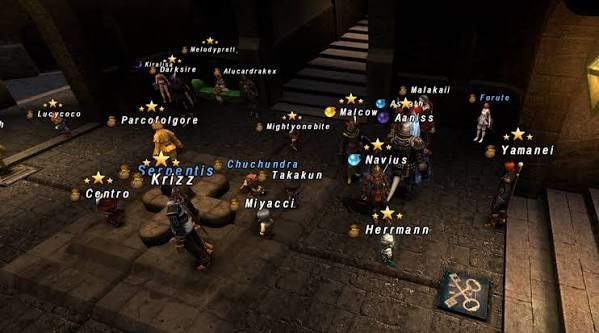
Shik XIPivot FFXI: This practical guide explains the key facts, checks, and next steps clearly.
Shik XIPivot FFXI: AEO Quick Answer
For a stable Shik XIPivot FFXI setup, back up configuration files, confirm the mod loader and client versions, install packs in separate folders, establish a clear priority order, and test one change at a time. Never overwrite original game data when a reversible loader workflow is available, and review the game’s current rules before using third-party modifications.
Texture replacement can refresh a classic game, but most failures are caused by path errors, conflicting packs, outdated loaders, or too many simultaneous changes. The fastest fix is not repeated reinstallation; it is controlled isolation. This guide treats modding as a small configuration-management project: preserve a clean baseline, know what each layer changes, record priorities, and create a rollback path. It also distinguishes visual troubleshooting from account-policy risk, which each player must evaluate against current official terms.
This topic benefits from both detailed context and primary-source verification. For additional background, read Shik XIPivot FFXI. For independent guidance, consult Square Enix FINAL FANTASY XI support centre.
At-a-Glance Decision Table
| Symptom | Most likely checks | Safe test |
|---|---|---|
| No textures change | Addon load, config path, priority | Enable one known replacement |
| Crash in one zone | Zone-specific file or memory load | Disable newest zone pack |
| Some assets change | Conflicting packs or partial coverage | Test priority one pack at a time |
| Problem after update | Client or loader incompatibility | Run clean client and check releases |
Understand the asset-loading chain
FFXI stores visual resources in DAT files. A pivot-style loader redirects requests toward replacement assets while leaving original files intact. The launcher or framework loads the addon, the addon reads its configuration, and priority rules determine which pack wins when two files target the same asset. A failure at any layer can look like a bad texture pack, so confirm the chain from launcher to addon to folder to individual file.
Why this distinction matters
Readers searching for Shik XIPivot FFXI often need a decision, not a definition. The distinction above prevents a familiar label from being treated as proof. It also creates a record of what is known, what remains uncertain, and which source can resolve the uncertainty. That habit improves both personal decisions and publishable research: state the evidence, identify its limits, and choose the next reversible step before committing money, data, time, or reputation.
Create a clean and reversible baseline
Before adding anything, launch the game without replacement packs and note that zones, menus, and characters load normally. Copy configuration files to a dated backup and record client, framework, addon, and pack versions. Avoid modifying original installation data. Keep each pack in its own clearly named directory. A clean baseline lets you distinguish a game update problem from a mod problem and makes rollback a two-minute task.
Validate folder paths and priority
The most common setup issue is an extra nested folder or a configuration path that points one level too high. Confirm that the loader can reach the expected asset structure. Use simple folder names and avoid moving a pack after configuring it. When several packs replace the same resource, place the preferred pack higher in the documented priority system. Keep a small text record of load order so later experiments are reproducible.
Practical checklist
Pause before acting. Confirm the exact name, date, context, and source. Compare at least two independent records when the consequence is meaningful. Save screenshots or reference numbers, but protect private information. If a claim changes over time, retain the earlier date and label the update. Finally, distinguish what a source directly proves from what you infer. This short checklist prevents most avoidable errors caused by urgency, stale pages, ambiguous labels, or a single persuasive review.
Test with a one-change method
Enable one small pack, load a known zone or model, and check the log for errors. Then add the next pack. If a crash or missing texture appears, disable the most recent change and retest. This binary approach is faster than guessing among dozens of files. For intermittent problems, test the same character, zone, weather, and graphics settings so the conditions remain comparable.
Diagnose common visual failures
No visible change usually points to a loader that did not start, a wrong path, or a lower-priority pack winning. Purple, black, or missing textures may indicate incomplete assets, unsupported formats, or a mismatched file. Crashes on entering one zone often identify a specific replacement associated with that zone. Performance drops can result from high-resolution packs exceeding memory or storage throughput, especially when many assets load together.
Common mistake to avoid
The most common mistake is moving from one clue to a confident conclusion. A name, review, screenshot, app result, or promotional claim may be relevant without being decisive. Cross-check the item that would change your action. When verification is impossible, choose a lower-risk option, reduce the size of the commitment, or wait. Responsible uncertainty is more useful than false precision.
Handle game updates and compatibility changes
A client update may change files, paths, or assumptions used by third-party tools. Disable modifications before troubleshooting a newly patched client, confirm the unmodified game works, and wait for maintainers to publish compatibility information. Do not assume an old configuration remains safe. Version labels, release notes, and community issue reports are more useful than reinstalling random components from unverified mirrors.
Security and account-safety boundaries
Download from the maintainer’s known repository or documented community channel, scan archives, and avoid executables bundled with texture packs. Never share account credentials with a mod installer. Cosmetic changes can still fall under a game’s rules on third-party tools; official policies can change. Review current Square Enix terms and support information, understand that use may be at your own risk, and avoid tools that automate gameplay or alter network behaviour.
Five-Step Action Plan
1. Define the decision before collecting more information

Shik XIPivot FFXI works best when readers verify the most important details and keep a clear record of each decision.
Write the exact decision connected to Shik XIPivot FFXI: what are you considering, what could go wrong, and what evidence would make you proceed, pause, or stop? A clear decision question prevents endless browsing. It also reveals whether you need a current policy, a technical check, a professional opinion, an official record, or simply a confirmation. Set a reasonable deadline based on the consequence. A low-cost reversible choice needs less investigation than a medical, legal, financial, travel, or account-safety decision.
2. Separate facts, claims, and assumptions
Create three short columns. Put directly observed or officially documented information under facts. Put statements made by companies, reviewers, callers, creators, or other interested parties under claims. Put your interpretation under assumptions. This does not mean every claim is false; it prevents language from outrunning evidence. Add a date beside changing information. If two sources disagree, preserve both and identify which source has direct authority over the disputed detail.
3. Verify the controlling detail
Find the one detail that controls the next action. In a Shik XIPivot FFXI search, it may be identity, confirmation status, licence, compatibility, route restriction, source status, transaction record, contract term, or measurable outcome. Verify that detail through an official portal, a provider reached independently, a primary document, or a qualified professional as appropriate. Do not provide secrets or sensitive data merely to obtain reassurance. Record the contact route, date, reference number, and exact answer.
4. Choose the least risky useful step
When evidence is strong, proceed within the documented conditions. When evidence is mixed, reduce exposure: use a protected payment method, test one component, shorten the commitment, request written terms, select a conservative route, or delay publication until confirmation. When major red flags remain, stop and use an alternative. This decision ladder avoids two extremes: acting impulsively because an offer feels urgent and abandoning every unfamiliar option because complete certainty is impossible.
5. Review the outcome and update your record
After the action, compare the result with the evidence and expectations. Save final receipts, confirmations, configuration notes, official updates, performance data, or written responses. If the outcome differs, document why before drawing a broad conclusion. A single experience can be useful but may not represent every user or future version. Updating the record turns one decision into reusable knowledge and helps future readers understand what changed, when it changed, and which conclusion remains supported.
Real-World Example
A player installs three texture packs and sees upgraded environments but unchanged character armour. Instead of reinstalling the game, the player disables two packs, verifies the armour pack path, and discovers an extra nested directory. After correcting the path, the armour appears. The player then restores the other packs individually, documents priority, and keeps the known-good configuration as a backup.
Expert and E-E-A-T Notes
The guidance follows reversible troubleshooting principles, clearly separates technical compatibility from policy compliance, and does not promise that third-party tools are officially approved.
Editorial verification note: Product features, policies, schedules, laws, platform ownership, prices, and service availability can change. Readers should check the linked primary or official source at the time of action. Examples are illustrative and are not presented as verified accounts of a particular customer, patient, traveller, or litigant.
Frequently Asked Questions
Should I overwrite original DAT files?
A reversible loader workflow is safer because it preserves a clean baseline and simplifies rollback.
Why does only part of a pack appear?
The pack may have partial coverage, a conflicting priority, or an incorrect subfolder.
What should I do after an FFXI update?
Test the clean client first and confirm loader compatibility before re-enabling packs.
Can high-resolution textures reduce performance?
Yes. Larger assets can increase memory, storage, and loading demands.
Are cosmetic mods risk-free for an account?
No third-party modification should be described as risk-free; review current official rules and decide accordingly.
Conclusion
The most reliable way to approach Shik XIPivot FFXI is to combine clear definitions, current evidence, and a proportionate next step. Use the framework in this guide to verify the detail that actually controls your decision, keep a record when money or safety is involved, and return to official sources when information changes. That approach is practical, transparent, and more dependable than relying on a single headline, review, lookup result, or viral claim.
Dermani Med Spa Services: How to Evaluate Treatments, Providers, and Safety
SEO ARTICLE 5 OF 11