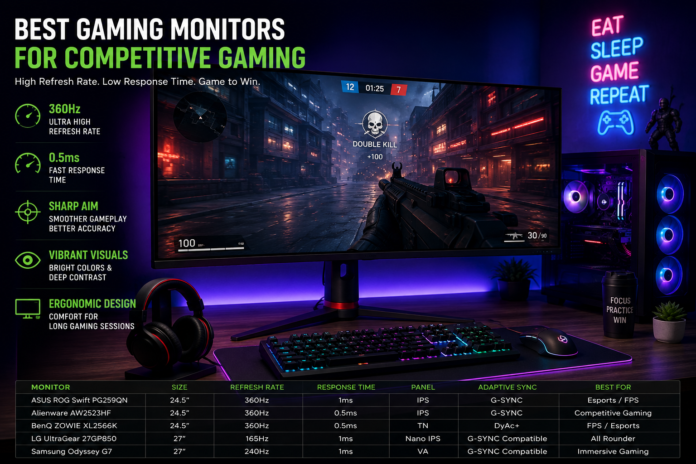
Best Gaming Accessories For Pc Gamers is explained in this practical, step-by-step guide with clear recommendations, comparisons, and real gaming examples.
AEO Quick Answer
The best gaming accessories for PC gamers are a precise gaming mouse,
responsive keyboard, comfortable headset, suitable mousepad, ergonomic
chair, controller where useful, and a monitor that matches the PC’s
frame-rate capability. Competitive players should prioritize low latency
and control; casual and single-player gamers can put more weight on
comfort, audio quality, immersion, and convenience.
This guide targets the search intent behind “best gaming accessories
for PC gamers” with practical explanations, comparison points, gaming
scenarios, and buying or optimization advice that can be applied without
relying on hype.
Why
Gaming Accessories Matter More Than Most Gamers Think
PC performance is not only about the processor and graphics card. The
accessories between you and the game determine how quickly you can aim,
how clearly you can hear directional cues, how comfortably you can play
for long sessions, and whether the display can actually show the frames
your computer produces. A powerful PC paired with a basic 60 Hz screen
and an uncomfortable office mouse can feel less responsive than a
balanced setup built around the player’s real needs.
The right accessory is therefore not automatically the most expensive
one. A competitive Valorant player may gain more from a lightweight
mouse, a large mousepad and a high-refresh monitor than from premium
speakers. A student who plays Minecraft, Fortnite and story games may
value a versatile headset, compact keyboard and controller that also
work for classes. The goal is balance: spend on the equipment that
affects your games and habits most.
1. Gaming Mouse: Precision
Comes First
A gaming mouse should fit your hand, grip style and preferred
sensitivity. Sensor quality matters, but modern reputable gaming mice
are already accurate enough for most players. Shape, weight, button
placement and wireless implementation often make a bigger day-to-day
difference. FPS players commonly prefer lighter designs because repeated
flicks and corrections require less effort, while MMO and strategy
players may benefit from extra programmable buttons.
Do not choose DPI by marketing numbers alone. Extremely high DPI does
not automatically improve aim. Many competitive players use moderate
effective sensitivity and make larger arm movements. A consistent
surface and a mouse that does not force an awkward wrist angle are more
useful than chasing the largest specification on the box.
2. Mechanical or
Fast-Response Gaming Keyboard
A good keyboard improves consistency and comfort. Mechanical
keyboards remain popular because switch types can be selected for feel,
sound and actuation. Linear switches are often chosen for gaming because
the key travels smoothly, while tactile switches provide a noticeable
bump that some users prefer for typing and mixed work. Hall-effect and
adjustable-actuation keyboards are another option for players who want
very fast or customizable inputs.
Layout also matters. A full-size board provides a number pad, while
tenkeyless and 75% layouts create more mouse space. For low-sensitivity
FPS gaming, that extra desk room can be genuinely useful. Students may
prefer a compact board that fits easily beside notebooks and other study
equipment.
3. Gaming Headset or
Headphones
Audio is both an immersion tool and a source of gameplay information.
In games such as Counter-Strike 2, Valorant and Rainbow Six Siege,
footsteps and positional effects can influence decisions. Look for clear
imaging, comfortable ear pads, a microphone that keeps speech
intelligible, and a clamping force you can tolerate for long
sessions.
Virtual surround can be useful for some users, but it is not a
requirement for competitive play. Good stereo reproduction can provide
excellent positional information. If you already own quality headphones,
a separate USB microphone may deliver better voice quality than
replacing the entire audio setup.

In-Blog Image: Quick checklist for the main decision points in this
guide.
4. Mousepad and Desk Surface
A mousepad sounds simple, yet it affects glide and stopping control.
Control-oriented cloth pads provide more friction and can help precise
stopping; faster surfaces suit players who prefer effortless movement.
Size is equally important. Low-sensitivity players need enough room to
turn without lifting the mouse constantly.
Keep the pad clean because oils and dust change glide over time. A
large desk mat can also stabilize the keyboard and protect the desk,
although dedicated competitive players may still prefer a mouse-specific
surface with a known texture.
5. Controller for PC Gaming
Keyboard and mouse are excellent for shooters, strategy games and
titles with many shortcuts, but a controller can be better for racing,
platformers, sports games and many third-person adventures. Analog
sticks and triggers provide gradual input that digital keys cannot
reproduce in the same way. PC gamers do not need to choose one control
method forever; a flexible setup can include both.
For example, you might use mouse and keyboard in Fortnite build
fights, then switch to a controller for Forza or a relaxed story game.
Buy based on the games you actually play rather than the idea that every
PC accessory must be used in every title.
6. Monitor, Stand and
Ergonomics
A gaming monitor should be treated as part of the performance chain.
Intel’s monitor guidance explains that refresh rate determines how
frequently the screen updates and that the benefits of high refresh are
meaningful only when the PC can also generate sufficiently high frame
rates. Resolution, response behavior, panel quality and input lag all
deserve attention.
A monitor arm or adjustable stand can be almost as important as the
panel. Position the display so you can sit naturally without craning
your neck. Pair this with a supportive chair and a desk height that
allows relaxed shoulders. Ergonomics will not increase benchmark FPS,
but it can improve consistency by reducing fatigue.
7. Optional Accessories
Worth Considering
A USB hub can help laptops or compact PCs with limited ports. A
dedicated microphone is useful for streaming, group projects and voice
chat. A webcam matters for creators and students. Cable-management clips
keep the mouse cable and charging leads out of the way. A small
uninterruptible power supply can protect work and reduce the risk of
sudden shutdowns where power interruptions are common.
RGB lighting, headphone stands and decorative accessories are
optional. They can make a setup feel personal, but they should come
after the essentials if the budget is limited.
Gaming
Example: Building a Balanced Esports Setup
Imagine a player with a midrange PC that produces roughly high frame
rates in Valorant at 1080p. Spending the remaining budget on a
lightweight mouse, large control pad, reliable headset and a
high-refresh monitor creates a coherent competitive setup. Buying an
expensive 4K display instead may force the GPU to work harder while
providing less practical benefit for that player’s main game.
The same logic changes for a player focused on Cyberpunk-style
cinematic games. That user may prefer a higher-resolution monitor,
richer audio and a controller. There is no universal accessory ranking;
there is a best combination for a particular player.
How to Prioritize Your
Accessory Budget
Start with anything that is actively limiting you. Replace a failing
mouse before buying decorative lighting. Upgrade a 60 Hz monitor if your
PC regularly produces far more than 60 FPS and competitive
responsiveness matters. Replace an uncomfortable headset if long
sessions cause pressure or headaches. Once the weak points are solved,
improve convenience and aesthetics.
A useful rule is to separate performance essentials, comfort
essentials and optional extras. Performance essentials include the input
device and display. Comfort essentials include fit, desk layout and
audio wearability. Extras include lighting, stands and cosmetic
upgrades. This prevents a visually impressive setup from hiding basic
usability problems.
Mistakes to
Avoid When Buying PC Gaming Accessories
Buying every accessory from the same brand is not automatically the
best strategy. Ecosystem software can be convenient, but shape, comfort
and performance should come first. Another mistake is choosing a mouse
by maximum DPI, a headset by the word ‘7.1,’ or a keyboard only by RGB.
Marketing labels are shortcuts, not substitutes for fit and real
features.
Also avoid spending the entire budget before measuring your desk.
Keyboard width, monitor stand depth and mousepad size can conflict.
Check USB availability too. A laptop user may need a powered hub, while
a desktop user may benefit from rear ports for permanent devices and
front ports for temporary accessories.
Wired vs Wireless
Accessories
Wired devices remain simple: there is no battery to charge and
interference is rarely a concern. Wireless equipment removes cable drag
and makes a desk easier to manage. Modern gaming-focused wireless mice
and headsets can be responsive enough for demanding play, so the choice
is increasingly about convenience, battery life, weight and price.
For a student or shared-space setup, wireless can make packing and
cleaning easier. For a permanent competitive desk, wired is still
attractive when you want the fewest variables. If you choose wireless,
keep firmware updated and place the receiver close enough to maintain a
strong connection.
Quick Comparison Table
| Accessory | Best for | Priority |
|---|---|---|
| Gaming mouse | Aim, fast input, comfort | High |
| Keyboard | Reliable movement and shortcuts | High |
| Headset | Communication and positional audio | High |
| Mousepad | Consistent glide and control | Medium-High |
| Controller | Racing, sports, platformers | Game-dependent |
| Monitor arm | Ergonomics and desk space | Medium |
| RGB/stands | Aesthetics and organization | Optional |
Related Gaming Guides
How to Build a Gaming PC: Step-by-Step Beginner Guide for 2026, Best Gaming Laptops for Students: What to Buy for Study and Play in 2026, How to Improve Gaming Performance on PC: FPS, Latency and Stability Guide, Best Gaming Monitors for Competitive Gaming: 2026 Buying Guide.
External Authority Links
Frequently Asked Questions
What is the
most important gaming accessory for PC?
For most players, the mouse and monitor have the clearest effect on
interaction and visual responsiveness. The exact priority depends on the
games you play.
Do I need a
mechanical keyboard for gaming?
No. A mechanical keyboard can offer preferred feel, durability and
switch choices, but a reliable membrane keyboard can still play games
perfectly well.
Is wireless gaming gear too
slow?
Modern gaming-focused wireless devices can provide very low latency.
Choose reputable models and keep receivers positioned correctly.
Should I buy a
controller for a gaming PC?
Yes if you play racing, sports, platformers or games designed around
analog input. It is optional for players focused on mouse-and-keyboard
titles.
Is a 144 Hz monitor worth it?
It can be a major improvement over 60 Hz for fast games when your PC
can generate frame rates high enough to take advantage of it.
Final Takeaway
The best answer to best gaming accessories for PC gamers depends on
matching hardware and settings to real gaming needs. Start with your
target games, budget and performance goal, prioritize the parts or
settings that remove the biggest limitation, and verify results with
real use. A balanced setup usually delivers a better experience than
chasing one impressive specification while ignoring comfort,
compatibility, thermals or display capability.